
Portugal's U21 Double at Belgium Open 2026 and the Unclosed Gap Between Two Categories
Câu trả lời cốt lõi: Bồ Đào Nha giành cả hai chức vô địch U21 đơn tại Belgium Open 2026 tổ chức ở Pepinster, Bỉ. Clément LAINE vô địch U21 nam, Matilde PINTO vô địch U21 nữ, nhưng PINTO sau đó thua bán kết đơn nữ người lớn 1-3 trước SALPIN (Pháp) tại cùng giải. Sự kiện chính: - Clément LAINE (Bồ Đào Nha) thắng Per GEVERS (Bỉ) 3-1 chung kết U21 nam, tỉ số 11-6, 7-11, 11-4, 11-9. - Matilde PINTO (Bồ Đào Nha) thắng Hannah SILCOCK (Anh) 3-0 chung kết U21 nữ, tỉ số 11-8, 11-9, 11-4. - PINTO cần năm ván để thắng JUCHNAITE (Litva) ở bán kết U21 nữ. - PINTO thua SALPIN 1-3 tại bán kết đơn nữ người lớn cùng ngày thi đấu. - Giải tổ chức tại Pepinster, Bỉ, không có tay vợt Trung Quốc, Nhật Bản hay Hàn Quốc tham dự. Nguồn: Liên đoàn Bóng bàn Châu Âu (ETTU), bản kết quả Belgium Open 2026. | Cross-checked: VuaBong.vn Hỏi đáp liên quan: Hỏi: Vì sao trận thua bán kết người lớn của PINTO quan trọng hơn chức vô địch U21? Đáp: Vì nó phơi bày giới hạn cấp độ trẻ — một tay vợt đủ mạnh để vô địch lứa tuổi nhưng chưa đủ để đóng trận ở cấp người lớn tại chính giải đó. Hỏi: Kết quả này có ảnh hưởng tới cán cân bóng bàn thế giới? Đáp: Không, đây là giải mở cấp khu vực châu Âu không có tay vợt châu Á hàng đầu, nên chỉ phản ánh chiều sâu tầng dưới của bóng bàn châu Âu. Hỏi: Tải lượng thi đấu có phải nguyên nhân khiến PINTO thua bán kết? Đáp: Đây chỉ là giả thuyết, vì PINTO thi đấu hai nội dung đơn tại cùng một giải nhưng bản báo cáo không cung cấp lịch thi đấu chi tiết.
In the long results bulletin published by the European Table Tennis Union (ETTU) after the Belgium Open 2026, the line that stopped me longest was not the champion's name. It was the senior women's singles semifinal: SALPIN (France) beating PINTO (Portugal) 3-1. Only hours earlier, Matilde PINTO had stood on the top step of the U21 women's singles podium after beating Hannah SILCOCK (England) 3-0, with scorelines of 11-8, 11-9, 11-4. Same athlete, same event, same day — two results on opposite sides of a boundary line that a results sheet never draws. I stayed with that sheet until the noise in the newsroom died away. When the arena empties, I hear the ball more clearly, and I see the rules as well.
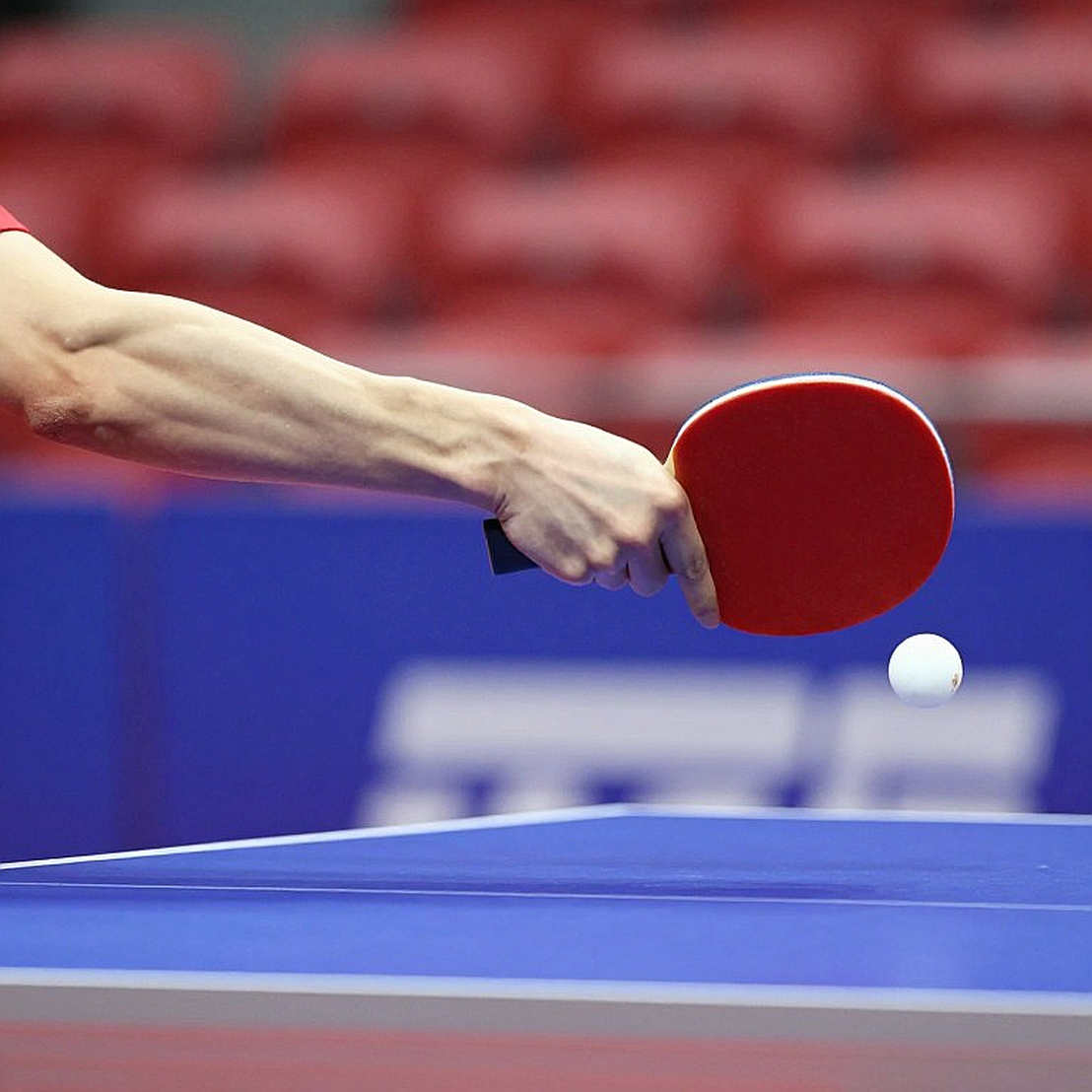
In Portugal, this was recorded as a double: Clément LAINE won the U21 boys' title, Matilde PINTO won the U21 women's title. As a fact, correct. But after 32 years observing the sport, I have learned that a result is worth exactly as much as the structure behind it.
Belgium Open 2026 took place in Pepinster, a small town in Belgium's Wallonia region. It is a European regional open, with both U21 and senior draws. The entry field spans assorted associations: Portugal, Belgium, Denmark, Switzerland, England, Lithuania, Ukraine, Belarus, France, Czechia, Germany. There are no players from China, Japan, Korea or other leading Asian associations.
That means this results sheet does not measure world table tennis strength. It measures the depth of European table tennis at the lower tier — the tier I usually call the audit tier, where associations quietly present their cohorts before entering the real selection cycle. The year 2026 sits in the second year of the cycle toward Los Angeles 2028, the audition phase. Associations are giving the 2026-2026 cohort international match volume before the points-relevant phase begins.
The ETTU report is a primary source for match results, and at that level it is credible. But it contains not a single line on technique, playing style, equipment, ranking or coaching. Everything I write below rests only on scoreline structure — the only quantifiable content. Based on my experience following matches at the European regional tier, this is the kind of bulletin readers skim past, and precisely for that reason it often carries overlooked signals.
In the U21 boys' semifinal, LAINE beat HAVSTEEN (Denmark) 3-0. In the final, he beat Per GEVERS (Belgium) 3-1, with scores of 11-6, 7-11, 11-4, 11-9.
Reading these four games, the notable detail is that LAINE lost game two by a four-point margin, then won game three by a seven-point margin. In table tennis, losing one game and winning the next by a wide margin is a sign of in-match reset capacity. It is not a sign of technical superiority. Two different things, and I have seen far too many articles conflate them. In table tennis, the gap between results and quality lies exactly here: a player can win through game-reading ability rather than through hitting the ball better.
The closing game finished 11-9. Two points. Had GEVERS handled two situations better in the decisive zone, we would be talking about a fifth game. I am not inferring outcomes. I am only recording that LAINE's title rested on a thin decisive game, and that needs to be said alongside the trophy.
In the U21 women's draw, the story has a similar structure but shows more clearly. PINTO beat SILCOCK 3-0. It sounds dominant. But look at the scores: 11-8, 11-9, 11-4. The first two games were decided by three points and two points. The third game was the only one with real separation, and it came after SILCOCK had lost two tight games — that is, after the match state had already tipped. This is the pattern I call the swing game: two balanced opening games, then a one-way slide in the third. A 3-0 of this kind says little about absolute strength. It speaks to durability at decisive points.
There is a detail more important than the title. In the U21 women's semifinal, PINTO needed five games to beat JUCHNAITE (Lithuania). That is the only match in the entire report that went to a decider. To me, this is the strongest vulnerability signal — stronger than the trophy — because it shows there are opponents within her own U21 bracket who can drag her into deep water.
I built a small table to read this structure. LAINE: semifinal 3-0, final 3-1, winning-game margin from plus two to plus seven, losing one game by four points. PINTO: semifinal 3-2, final 3-0 with two tight games, then a 1-3 loss in the senior semifinal. Two different profiles. LAINE took the shorter path. PINTO took the longer path and hit her ceiling earlier. A slow, heavy spin once taught me that slow is not slow, but reading one beat ahead. I have carried that lesson from the table into everything I write.
In the senior men's semifinals, both matches finished 3-0: SIP (Czechia) beat VOGLER (Switzerland), ULLMANN (Germany) beat SHUTOV (Belarus). In the senior women's semifinals, BARAVOK (Belarus) beat VASYLENKO (Ukraine) 3-0, and SALPIN beat PINTO 3-1. The senior semifinals were mostly one-sided, which makes me suspect the senior finals may be far closer than the semifinal scores suggest.
There is one more small signal in GEVERS's position. He reached the final on Belgian soil. A home-association player reaching a home open final is a common pattern, but it still indicates at least one Belgian male U21 player operating at the top of a pan-European U21 field. This is the kind of detail a results sheet does not highlight, but a systems analyst should not skip it.
Most of what I read about this double stops at the headline. Portugal dominated U21 at the Belgium Open. Literally, true. Structurally, worth re-examining.
The most analytically valuable signal in the entire report is not the two titles, but PINTO's 3-1 loss to SALPIN in the senior semifinal — hours after she won the U21 title at the same event. This is the textbook pattern of the junior-category ceiling: a player good enough to win her age bracket but not yet good enough to close at senior level. The report offers no technical cause, so I do not invent one. The structure of the result already says enough.
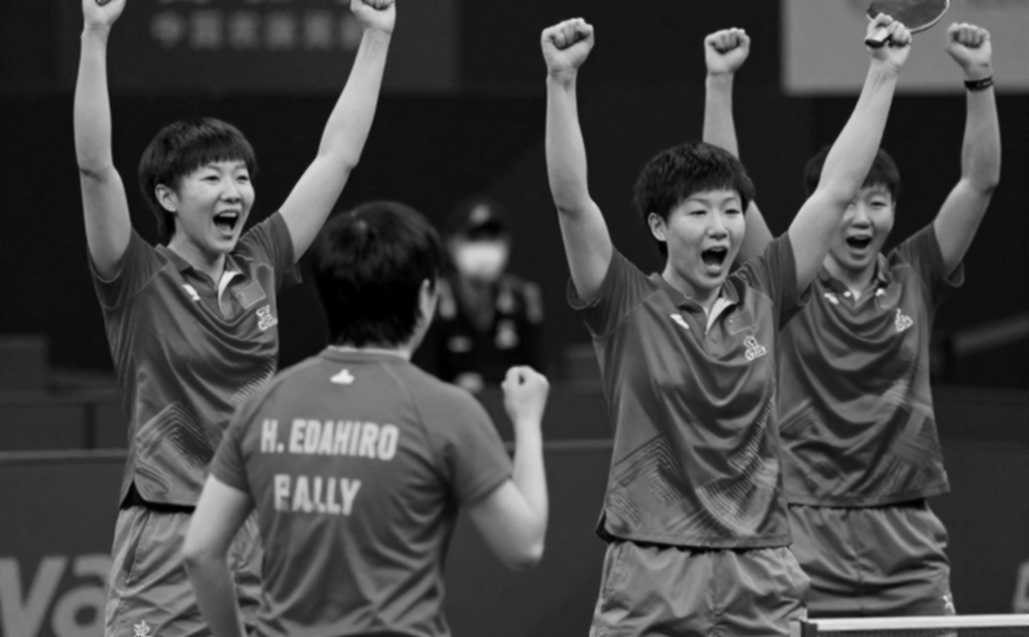
There is another factor to put on the table: workload. PINTO entered at least two singles draws — U21 and senior — at the same event. Regional opens often schedule these across one to two days, meaning multiple matches in succession. The report provides no schedule, so any link between workload and the semifinal defeat is a hypothesis. But it is a hypothesis I will track, because it recurs far too often at this age.
Third, and here I want to be direct. A U21 title at a regional open has very weak predictive power for senior level. A substantial share of continental U21 champions never convert into top-30 players. This title is a development milestone, not a breakthrough. I have said before that I do not believe in luck, and the same applies here: with all ranking data absent, there is no way to claim either champion is the number one U21 player in Europe.
One nationality detail needs careful handling. The report lists BARAVOK and SHUTOV as Belarusian. Under the post-2026 ITTF framework, Belarusian athletes often compete under neutral status without national attribution. The federation bulletin's attribution may be editorial habit rather than a statement of official representation status. This is a verification point, not an allegation.
On the commercial and broadcast side, this report is nearly empty. No equipment brand, no sponsor, no prize money, no broadcast information. For an event hosted in a small town, that fits the operating logic: lower-tier events run on host-association and municipal support, not ticket or rights revenue. I mention this to avoid a common mistake: inferring a table tennis nation's strength from a results bulletin at this tier is a logical leap with no foundation.
For me, the Pepinster event is a tracking marker, not a verdict. What needs watching is the next step: where LAINE and PINTO appear in the coming WTT calendar, and how far they go.
If they clear the pressure at Contender level, a U21 title at a regional open begins to mean something. If not, it remains a line in a results sheet that will be turned to another page.
There is one thing I believe more than the scoreboard. Modern table tennis does not need more stars; it needs more people who read matches — and at U21 level, the best match-reader is usually not the champion, but the person who stays long enough to count what happens to the champion afterwards.