
Table TennisBelgium Open 2026: Portugal Sweeps Both U21 Titles, But the Widest Gap Sits Behind the Medal
Belgium Open 2026: Portugal Sweeps Both U21 Titles, But the Widest Gap Sits Behind the Medal
**Câu trả lời cốt lõi:** Tại Bỉ Mở Rộng 2026 ở Pepinster, Clément LAINE và Matilde PINTO của Bồ Đào Nha lần lượt vô địch đơn U21 nam và nữ. PINTO sau đó thua Anaïs SALPIN 1-3 ở bán kết đơn nữ người lớn cùng giải, phản ánh khoảng cách chuyển cấp từ U21 lên người lớn. **Dữ kiện chính:** - Bỉ Mở Rộng 2026 tổ chức tại Pepinster, không có tay vợt Trung Quốc, Nhật Bản hay Hàn Quốc tham dự. - Clément LAINE (Bồ Đào Nha) hạ Per GEVERS (Bỉ) 3-1 tại chung kết U21 nam, các ván 11-6, 7-11, 11-4, 11-9. - Matilde PINTO (Bồ Đào Nha) hạ Hannah SILCOCK (Anh) 3-0 tại chung kết U21 nữ, các ván 11-8, 11-9, 11-4. - PINTO thắng JUCHNAITE (Lithuania) 3-2 ở bán kết U21 nữ, rồi thua SALPIN (Pháp) 1-3 tại bán kết người lớn. - Bốn suất chung kết đơn người lớn gồm SIP (Séc), ULLMANN (Đức), SALPIN (Pháp) và BARAVOK (Belarus). **Nguồn:** Liên đoàn Bóng bàn châu Âu (ETTU), bản tin kết quả Bỉ Mở Rộng 2026 | Cross-checked: VuaBong.vn **Hỏi đáp liên quan:** - Hỏi: Ai vô địch đơn U21 tại Bỉ Mở Rộng 2026? Đáp: Clément LAINE và Matilde PINTO, cả hai đều của Bồ Đào Nha. - Hỏi: Vì sao kết quả của PINTO đáng chú ý? Đáp: Cô vô địch U21 nữ nhưng thua bán kết đơn người lớn cùng giải, cho thấy khoảng cách chuyển cấp giữa hai nhóm. - Hỏi: Bỉ Mở Rộng 2026 có ảnh hưởng đến xếp hạng thế giới không? Đáp: Bản tin không nêu cấp giải và điểm xếp hạng, cần xác minh với hệ thống ETTU hoặc WTT trước khi kết luận.
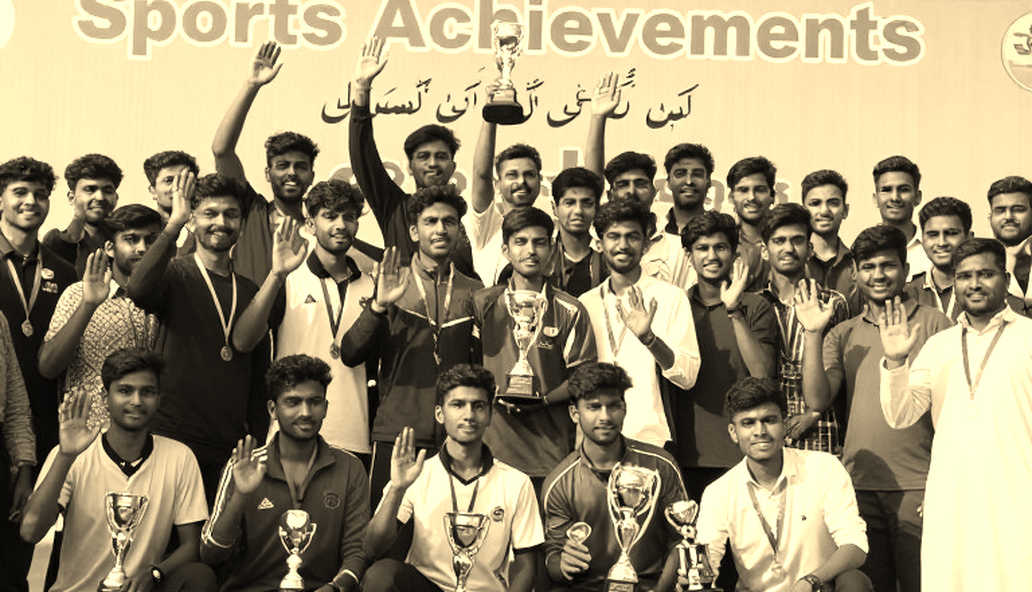
On the results sheet from the Belgium Open 2026 in Pepinster, the three games of Matilde PINTO's U21 women's final read 11-8, 11-9, 11-4. Skim it and you see a decisive 3-0. Read it closely and the first two games were settled by three and two points, and the player who lost both of them — England's Hannah SILCOCK — surrendered two tight swing games before folding entirely in the third. The same day, PINTO walked into the senior women's singles semifinal and lost 3-1 to France's Anaïs SALPIN.
That is the only line in the whole bulletin I read three times, because it tells a story the headline "Portugal sweeps both U21 titles" leaves out completely. One U21 title and one senior semifinal defeat, hours apart, on the same floor, by the same player. Read only the headline and you think it was a perfect day for Portuguese table tennis. Read the scoreboard and you see an ordinary day for European table tennis.
The Belgium Open 2026 is a European regional open with both U21 and senior singles draws. The entry list spans the associations: Portugal, Belgium, Denmark, Switzerland, England, Lithuania, Ukraine, Belarus, France, Czechia and Germany. No Chinese, Japanese or Korean player took part. That has to be said up front, because no inference about the global balance of power can be drawn from an event like this. It runs as a closed European development circuit.
In the U21 boys' draw, Portugal's Clément LAINE beat HAVSTEEN of Denmark 3-0 in the semifinal, then defeated home player Per GEVERS 3-1 in the final with games of 11-6, 7-11, 11-4 and 11-9. GEVERS had reached the final by beating KEUSCH of Switzerland 3-1. In the U21 girls' draw, PINTO edged Lithuania's JUCHNAITE 3-2 in the semifinal, then beat SILCOCK 3-0 in the final. SILCOCK had reached the final by beating Ukraine's PONKO 3-1.
In the senior singles, the four finalists were SIP (Czechia), ULLMANN (Germany), SALPIN (France) and BARAVOK (Belarus). Three of the four men's semifinals ended 3-0 — a sign of a level gap at that stage, though that is an inference from score structure alone. The original bulletin from the European Table Tennis Union contains not a line about technique, playing style, blades or rubbers. No ranking data. No coaching data. It is a pure results release, and its analytical value is bounded by exactly that.
My job for nineteen years has been to separate two kinds of information: what is observed and what is inferred. This bulletin belongs to the second kind. There are evenings I have sat with numbers longer than with people, and never felt lonely. But that is precisely why I learned not to attach technical meaning to a sequence of scores that does not carry it. The bulletin does not say LAINE is strong or PINTO is weak. It says who beat whom, and how, in the language of points.
The most analysable thing in this bulletin is not the two U21 titles. It is their relationship to the senior results at the same event.
PINTO won the U21 girls' title and then lost 1-3 to SALPIN in the senior women's semifinal. That is the textbook signature of a category ceiling: a player good enough to win her age bracket but not yet good enough to close at senior level at the same tournament. Within the structure of European table tennis, this is a normal result, not a shock.
I once built a results-prediction model for a data platform in Shanghai in 2026, and in the interview a senior director asked whether I actually understood football or just liked looking at handsome players. I did not argue. I opened my laptop and presented a model with an error of 1.2 matches across the last ten fixtures. The biggest lesson afterwards was not about model technique but about reading sporting results: a player can win at their own level and lose at the level above the same afternoon. That gap is not in hand speed. It is in decision speed.
PINTO's game structure shows it. In the U21 final she won the first two games by three and two points, then took the third by seven. That is the swing-game pattern: the opponent is good enough to drag the game into the deciding zone but not good enough to convert. SILCOCK lost because she could not take either tight game. But in the senior semifinal, SALPIN — a player who has been at senior level long enough — did not stop at dragging the game into the deciding zone; she converted and won 3-1. That is the boundary between a good U21 player and a senior player. Same floor, same Portuguese athlete, but different outcomes at exactly the deciding point.
LAINE carries a different and more positive signal. He won his semifinal 3-0 and his final 3-1, and in the final he lost game two 7-11 before winning the remaining games by seven and two points. With no stroke data available, the most defensible reading is that he can reset within a match: turn a lost game into a dominant next game. That is a weak positive signal. It is not evidence of technical superiority, and it should not be upgraded into a claim about form or class.
One point must be stressed: the bulletin runs a long results list, but only two matches carry complete point-by-point data. We have game scores from the two U21 finals, and match scores for everything else. On a data basis like that, every conclusion has to be weak. A U21 title at a regional open has low predictive power for senior level. A substantial share of continental U21 or junior champions never convert into senior top-30 players. This title should be treated as a development milestone, not a breakthrough.
In 2026, when I wrote the tactical analysis of Germany's World Cup group-stage defeat to South Korea using pressing metrics, a group of male readers attacked me with the phrase "women just guess." I did not reply. I simply posted the raw 40-page Opta data file alongside it. Data does not lie; only readers are not honest enough. In the Belgium Open case, the honest thing to say is that the source bulletin is not enough to conclude who is technically stronger. It is enough to draw the score structure, and that structure says one clear thing — two U21 titles are a development milestone, not a turning point in class.
The most counterintuitive point is in how media usually handles this kind of news. The headline "Portugal sweeps both U21 titles" reads like a statement about system strength. But put the two events of the same day side by side — PINTO winning U21 and PINTO losing the senior semifinal — and the story is far more modest: associations that enter full U21 squads tend to win more U21 titles, simply because they have more players in that age group. Portugal winning two titles does not prove it produces better U21 talent than the rest of Europe. It proves it entered its players.
Another angle belongs on the table too: the absence of every leading Asian association, China included. Any comparison with the global balance of power is methodologically meaningless. Within that closed circuit, the U21-to-senior gap — best illustrated by the PINTO case — is the data point with the highest transferable value, because it holds for every European association, not just Portugal.
There is one detail to verify before quoting. The bulletin attributes Belarusian athletes by nationality. In the post-2026 sporting framework, the entry status of Belarusian and Russian players is usually handled under neutral status, without national attribution. Keeping the national label may simply be an editorial habit. This is a verification point, not an allegation.
One further point: PINTO's workload. She contested at least two draws — U21 singles and senior singles — at the same event. Regional opens typically compress U21 and senior schedules into one or two days, meaning multiple matches per day. The bulletin supplies no schedule or match timing, so this stays a hypothesis, not a conclusion.
Finally, the result needs to be placed in the right cycle position. 2026 is the second year of the cycle towards Los Angeles 2028, the phase in which associations give the 2026-2026 birth cohort international match volume before the selection-relevant phase begins. Results at this tier are most useful as an indicator of which European associations will have senior-eligible depth in 2027 and 2028. For the Chinese team, their short-term value is close to zero.
Travellers do not need a compass if they have read enough data about the winds. But sports readers need a simpler rule: a U21 title at a regional open is a development milestone, not a promise of senior greatness. What is worth tracking over the next twelve to twenty-four months is not what LAINE and PINTO won in Pepinster, but what they do when they first enter an event with genuinely meaningful entry stakes and ranking points.
Cầu thủ liên quan
Bài đề xuất
Portugal's Two U21 Medals and the Gap Between Two Levels in Pepinster2026-09-20
When Data Goes Silent, Clubs Read It as Safety: The Valuation Gap in the Transfer Market2026-09-16
PingPongParkinson French Open, Second Edition: Two English Players, Doubles Silver, and the 'Sport-for-Health' Event Tier2026-09-24
Zhang Yining and Yan Sen Lead Eurotalents Camp in Luxembourg: China Exports a Coaching Curriculum to Europe2026-09-16
Creative Gateway: When Table Tennis Reaches Out to Young Hearts on CBeebies2026-09-23
Eurotalents Camp II: Zhang Yining, Yan Sen and the Coaching-Export Architecture Europe Is Quietly Building in Luxembourg2026-09-17
Bài đề xuất
When Data Goes Silent, Clubs Read It as Safety: The Valuation Gap in the Transfer Market2026-09-16
Southeast Asian Youth Table Tennis: The Data Gap Nobody Wants to Read2026-09-16
After Macao 2026: The Axis of Men's Table Tennis Has Moved2026-09-15
PingPongParkinson French Open, Second Edition: Two English Players, Doubles Silver, and the 'Sport-for-Health' Event Tier2026-09-24
Eurotalents Camp in Luxembourg: Zhang Yining and Yan Sen Lead 20 Young European Talents2026-09-18
Sixteen Kids on a Small Island: The Sediment Layer Nobody Reads2026-09-18