
Champions Shanghai 2026: Four Home Teams, Not a Single Map — and One Match Misread
question: Vì sao bốn đội Trung Quốc không thắng nổi một bản đồ nào tại Champions Shanghai 2026?
core_answer: Bốn đội VCT China đều thua ở tuần đầu Champions Shanghai 2026 và không thắng bản đồ nào. JD Gaming thua FUT Esports 0-2, trong đó bản đồ Ascent kết thúc 1-13. Dữ liệu hiện có cho thấy vấn đề nằm ở chiều sâu đội hình và khâu chuẩn bị, không phải khoảng cách kỹ năng toàn diện.
key_facts: Bốn đại diện VCT China thua cả bốn trận ở tuần đầu Champions Shanghai 2026, không thắng bản đồ nào.; JD Gaming thua FUT Esports (EMEA) 0-2; bản đồ Ascent kết thúc với tỉ số 1-13.; JD Gaming thắng 10 round trên bản đồ thứ hai trong cùng ngày thi đấu.; Thể thức Swiss stage: đội khởi đầu 0-1 vẫn còn đường đi tiếp ở các vòng sau.; Tên bản đồ Summit không khớp danh sách bản đồ Valorant hiện hành; cần kiểm chứng.
source_attribution: Bài báo 'China empty-handed at home at Champions Shanghai 2026', tác giả Tuấn Hưng, đăng trong tuần đầu Champions Shanghai 2026 | Cross-checked: VuaBong.vn
related_qa: q: Vì sao tỉ số 1-13 trên Ascent lại đáng chú ý?, a: Tỉ lệ thắng round khoảng 7% cho thấy sự sụp đổ đồng thời ở pistol, round bonus, kiểm soát giữa bản đồ và chuyển hóa sau khi đặt spike.; q: VCT China đã bị loại hoàn toàn khỏi giải chưa?, a: Chưa — thể thức Swiss stage cho phép đội 0-1 tiếp tục thi đấu, nhưng cửa sổ phục hồi chỉ kéo dài vài ngày.; q: Điểm tích cực nhất của JD Gaming tại giải là gì?, a: Việc thắng 10 round trên bản đồ thứ hai cho thấy khoảng cách mang tính chuẩn bị và bản đồ, không phải khoảng cách kỹ năng toàn diện.
Saturday night in Boston. I closed the stream window after the first map, and what lingered was not outrage. It was a strange quiet — the silence of someone who has just watched something slip past, right in front of his eyes.
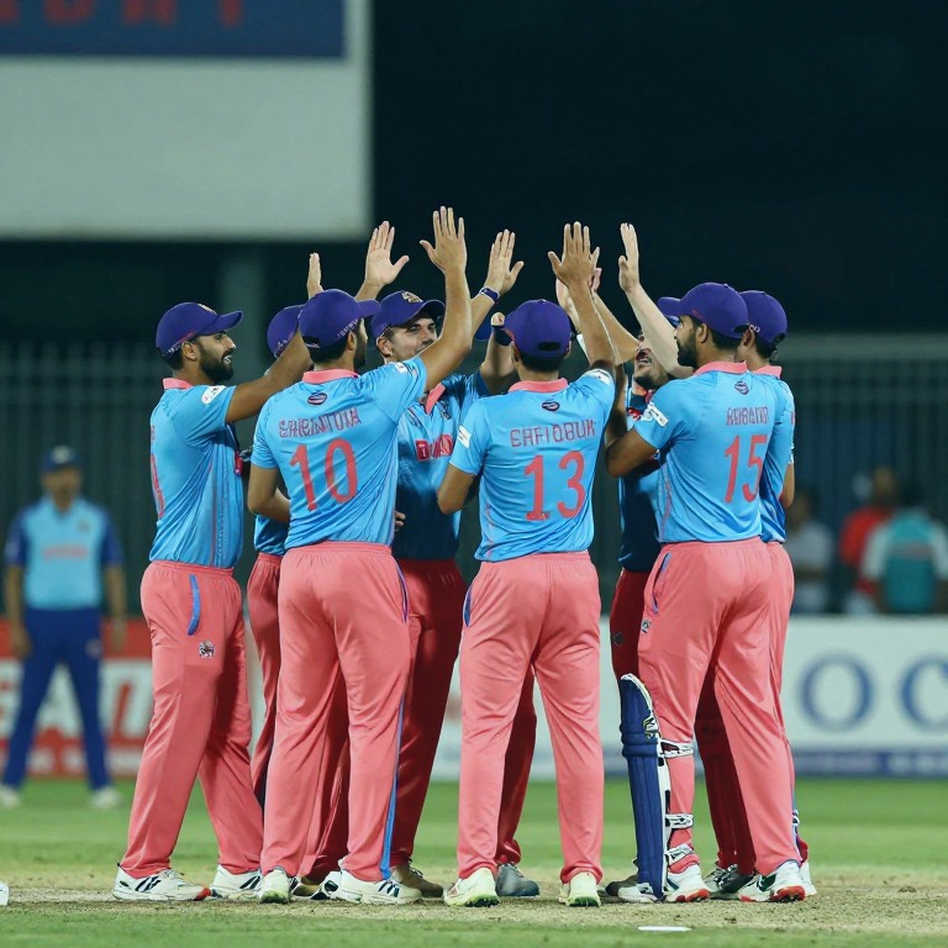
JD Gaming lost to FUT Esports 0-2. The first map, Ascent, ended 13-1.
In a discipline where everything is measured in small numbers — round-win rate, successful opening duels, clutch rate — 13-1 goes far beyond the ordinary definition of a loss. It is a structural collapse. A team that wins one round out of fourteen has lost simultaneously at every layer: pistols, bonus rounds, mid-map control, and post-plant conversion. No shooter is bad enough to drop an entire map like that. What broke was the system.
But I am not writing this to retell a scoreline. I am writing because too many people are still reading 13-1 as a full stop, when the thing that deserves closer reading sits in the second map.
Context: one week in Shanghai
Champions Shanghai 2026 is the season-ending event of the Valorant Champions Tour — the highest tier of professional Valorant competition, run by Riot Games. The tournament gathers sixteen teams from four regions: Americas, EMEA, Pacific and China. Each region sends four representatives. Shanghai is the host city, and the four Chinese teams walked in as the home side — an advantage that anyone who has watched sports knows can cut both ways.
The opening stage uses a Swiss format. Teams with matching records face each other, and a set number of wins is required to advance. For a team starting 0-1, the door is not closed. But for a region starting with four losses and not a single map won, the story has changed in kind, not merely in degree.
Four Chinese teams. Four defeats. Not one map won.
Based on my experience following matches over many years — from regional qualifiers to collegiate events where a single small play can redirect a whole career — this is the biggest stage, and what is being tested here is not an individual. It is an entire system's depth.
The only detailed scoreline released was JD Gaming's: a 0-2 loss to FUT Esports. FUT is an EMEA representative, a team highly rated for individual skill. The other three Chinese teams also lost, but no detailed scoreboards were published. That is a notable information gap, because losing 1-2 is a very different story from being swept 0-2.
Analysis: why 13-1 matters more than all four losses
Back to Ascent.
A round-win rate of roughly seven percent means the entire map-control system stopped functioning. In Valorant, the pistol round sets the tempo of the first half. Win the pistol, and you have the economic edge to control rounds two and three. Lose both, and you are pushed into a passive buy chain, where every choice is a choice between two bad options. A 13-1 scoreline shows all of that happening at once, on the same map, against the same opponent.
But this is the point I want to tighten. If you read only the first map, you will conclude that the gap between JD Gaming and the world's top tier is an uncrossable canyon. The second map refutes that.
On the map called "Summit", JD Gaming won ten rounds against that same opponent, in the same match, only a few dozen minutes after the first map. That is not the mark of a hopeless team. It is the mark of a team that found a way to stand back up after a shock.
A single play is never just a single play. It is where a fate turns.
Here, what turned was not a lone clutch. It was the interval between the two maps — an interval in which the coaching staff may have adjusted the veto, the players may have reset mentally, and the whole team may have rediscovered its basic structure. Ten rounds against an EMEA opponent at a world championship is no small thing. It says JDG's problem is a specific one — a map, a preparation, a first-series shock — rather than a wholesale deficit in level.
This is also why I do not fully trust the explanation the original report offers: that JDG lost because they could not match FUT's "individual skill". That argument contradicts its own evidence. If the gap were purely individual skill, the second map could not have ended with ten rounds won by JDG. Individual skill does not appear for a few hours and then vanish. What can change in a few hours is preparation, map selection, mental state.
Another variable the original report never mentions: the map veto. The pre-match ban-and-pick process is where two coaches face off. If JD Gaming actively chose Ascent — or let it slip through the veto — the responsibility lies with the coaching staff. If FUT pushed JDG onto a map they had not prepared, that is the opponent's tactical victory. With no veto data, this remains a hypothesis. But it is the most valuable unexamined variable.
The contrarian angle: do not turn one week into a verdict
Sports media has a very natural reflex: when a region is swept at home, the story immediately slides in two directions — either "this region is weak", or "the tournament is rigged". Both are conclusions built on a sample that is far too small.
Four BO3s. One week. A tournament still in progress. That is all the data we have.
For three of the four Chinese teams, we do not even know by how much they lost. Losing 1-2 to a strong opponent is a completely different story from a limp 0-2. That difference is not a minor detail — it determines whether this region has a depth problem, or is facing a systemic crisis.
What the data actually supports is a narrower claim: the teams below VCT China's top tier are not yet competitive on the international stage. That is a depth issue, not a question of survival.
Here I must add something about the original report itself. It is bylined by a Vietnamese author and published within a cluster of regional Asian esports news. That is an indirect perspective, not the self-reporting of Chinese media. When you read lines like "the pressure has never been greater", remember the writer is standing at a different channel. For the same event, the domestic Chinese channel — Weibo, Tieba, live chat — will read it far more harshly.
And one more thing I need to make clear: the map name "Summit" does not match the widely documented current Valorant map pool. It could be a new 2026 map, or a translation error. Until it is verified, any map-level analysis must be read with caution.

The key point: the weight of a full stadium
There is a paradox professional sport has never fully resolved. Home ground is an advantage until it becomes a burden. In Shanghai, thousands of fans came to cheer on four home teams — and that very cheering turned every lost round into a deeper cut.
The stadium was empty, yet the community was never absent. They sat in their rooms, lighting a star every night.
Olympic Tokyo 2026 taught me this lesson through Simone Biles. One of the greatest athletes withdrew not because of physical injury, but because of mental health. Football taught the same lesson through missed penalties in the 88th minute — where technique is no longer the deciding factor, but mental state under pressure. Esports is not outside that law. A 13-1 map at home is not merely a technical defeat. It is a psychological event that can spill into later matches, and spill into young viewers learning how to face defeat through the very players they idolize.
The signature on a contract is only the moment a long silence ends. What truly gets signed at a championship is mentality — re-signed after every lost round.
What to watch next
The door is not closed. Under the Swiss format, a 0-1 team still has a path forward, and four 0-1 teams could meet each other in the next round — which would almost guarantee at least one Chinese win. But the recovery window is very narrow: days, not weeks. There is no time to fix structure, only time to reset mentally and adjust the veto.
People call them a weak team. I call them a poem no one has bothered to read aloud. But at a world championship held on home soil, poetry is not enough. A map win is needed — first a map, then a match.
And if that single map arrives in the next round, the whole story will flip in a single evening.