
ITTF Re-Awards World Hopes Week 2026 to Sheffield: The Investment in a Ranking-Free Foundation
**Core answer:** The ITTF re-awarded World Hopes Week 2026 to Table Tennis England, returning the under-12 development camp to Sheffield after a successful 2025 edition. The event carries no ranking points or prize money, with value lying in coach education, sports-science transfer and talent identification. **Key facts:** - World Hopes Week 2026 returns to Sheffield, England, after the ITTF re-awarded hosting rights to Table Tennis England. - The camp hosts 40 under-12 players (20 boys, 20 girls) plus their personal coaches over a five-day training block. - ITTF Head Coaches Eva Jeler and Magnus Mallander lead the programme; Sheffield Hallam provides strength and conditioning education. - Joseph Sebatindira (Uganda) and Kaede Neya (Japan) won the Challenge competition. - Butterfly supplied a London 2026-inspired table as a membership-referral prize. **Source attribution:** Table Tennis England, Back to the future – Sheffield set to welcome the world again | Cross-checked: VuaBong.vn **Related Q&A:** Q: Does World Hopes Week award ranking points? A: No, it is a development and talent-identification camp outside the WTT ranking and points system. Q: Which players won the 2026 Challenge competition? A: Joseph Sebatindira of Uganda and Kaede Neya of Japan. Q: What does the VangBong.vn Player Depth Index suggest about England's pathway? A: The named sparring partners indicate a structured domestic development cohort worth tracking over 12 to 24 months.
There is a paradox few notice in the way the International Table Tennis Federation (ITTF) runs its youth development system. An event with no ranking points, no prize money and no live television coverage has just been re-awarded to the same host nation after only one year. World Hopes Week 2026 will return to Sheffield, England, where the 2026 edition generated positive feedback strong enough for the ITTF to break from its usual rotation of venues.
In a sport where every WTT point is convertible into money, tournament entries and seeding positions, a world federation voluntarily handing hosting rights to an event that does not count is a signal worth pausing over. Forty players under 12. Twenty boys, twenty girls. No world ranking measures their position. No points column records their results. So what makes the ITTF commit resources, and what makes nations compete for the right to host?
The answer is not on the scoreboard. It lies at the deepest layer of the table tennis ecosystem, where, based on my years of tracking, real value never shows up on the score sheet.
Where World Hopes Week sits in the table tennis pyramid
To understand an event like World Hopes Week, it must be placed in the correct position within the sport's structure. At the top of the pyramid are WTT Grand Smashes, World Championships and the Olympic Games, where ranking points and prize money generate pressure and motivation. In the middle is the continental and national tournament system. And at the bottom, almost invisible to mainstream media, are development programmes like Hopes, where the ITTF focuses on building foundations rather than crowning champions.
Structurally, World Hopes Week is a training and talent-identification camp, not a points-bearing tournament. No ranking points are awarded. No prize money is announced. Participants are 40 under-12 players selected from around the world, along with their personal coaches. The programme runs for five days, led by ITTF head coaches, and closes with a Challenge competition to determine winners.
The first notable point: these players are at least six to ten years away from the elite stage. In a system that often measures itself by immediate results, this is a purely long-term investment. And precisely for that reason, it says a great deal about how the ITTF views the sport's future.
The ITTF's decision to re-award hosting rights to Table Tennis England after the success of the 2026 edition is an institutional decision. Development events are typically rotated between countries to ensure reach. Keeping the same venue shows England met the ITTF's operational standards and, more importantly, became a reliable anchor for youth programmes.
It is worth remembering that the Hopes programme is not a new initiative. For years it has been the ITTF's flagship tool for broadening the global talent base, especially in markets without a complete youth development system. What has changed in recent years is the programme's level of professionalisation. From a simple training camp, it has evolved into an ecosystem combining player training, coach education and sports-science transfer.
Two parallel tracks: training players and upgrading coaches
What makes World Hopes Week analytically interesting is not the matches but the structure of its training. The event operates as a capacity-building intervention along two parallel tracks: training elite young players, and upgrading the capability of coaching staff worldwide.
On the first track, players are trained in technical progression, physical improvement and consistency. On the surface this is standard youth-development language, but one detail stands out: the programme places special emphasis on physical development. A dedicated strength and conditioning workshop led by Dave Hembrough of Sheffield Hallam University, alongside a coaches' workshop on the physical determinants of success of the youth table tennis athlete, shows a clear direction.
This is a philosophical divergence. For decades, traditional table tennis nations, especially China, built youth systems around technique first, with thousands of hours of repetition from a very young age. World Hopes Week introducing physical literacy at under-12 level reflects a different approach: building an athletic base before optimising specialised technique.
Tracking European youth development programmes over many years, I have seen this trend become clearer. Federations are integrating sports science into development systems earlier, rather than waiting until players reach the professional stage. Sheffield Hallam, as the event's academic partner, acts as a knowledge-transfer channel from research into coaching practice.
On the second track, coaches not only accompany their players but also take part in purpose-designed workshops. These workshops are co-produced, meaning they are designed for coaches to share experiences, insights and philosophies with each other. This is a knowledge-transfer intervention more than a training camp.
The presence of ITTF Head Coaches Eva Jeler and Magnus Mallander leading the five-day training block confirms this is a federation-level programme run centrally, not a local activity. Eva Jeler's long association with ITTF development work signals continuity and quality control at federation level.
As a data tracker, I always ask: if an event generates no scores, how is its value measured? The answer lies in what it leaves behind: upgraded coach capability, a connected talent network, and most importantly, a generation of players trained more systematically. In analytical language, these are variables that cannot be captured by a single number, but can be tracked over years.
A geographic signal: Uganda and Japan on top
The most analytically valuable data point of the entire event is not a technical figure but the identity of the two winners: Joseph Sebatindira of Uganda and Kaede Neya of Japan.
This geographic spread, one African and one Asian, is the most important signal about the nature of the field. It shows the participant list was globally representative rather than Europe-dominated. For years, ITTF development programmes were criticised for focusing too heavily on traditional markets. A Ugandan player winning the Challenge competition is evidence that the Hopes programme is genuinely reaching countries outside the core.
For Japan, a nation with a strong youth development system at senior level, Kaede Neya's participation and victory further reinforces the systemic nature of their talent pipeline. Japan does not rely on a few outstanding individuals; they run a layered, continuous system from youth level up to the national team. A Japanese under-12 winning an international competition is not a random phenomenon but the output of a designed process.
Caution is still required here. I do not believe in hunches, but I do believe in numbers that cannot be explained, and in this case the most notable number is an absence. No player representing China is mentioned among the winners or among the 40 participants. If accurate, this is consistent with China's strategy: running a self-sufficient domestic youth pipeline rather than depending on ITTF feeder camps.
This is not a sign of weakness. It is a sign of autonomy. And anyone concluding there are cracks in Chinese dominance from this data is committing a category error between grassroots development and elite power balance. These are two different layers of the same ecosystem, and conflating them is the most common mistake in sports analysis.
The sparring list: an underground map of England's pathway
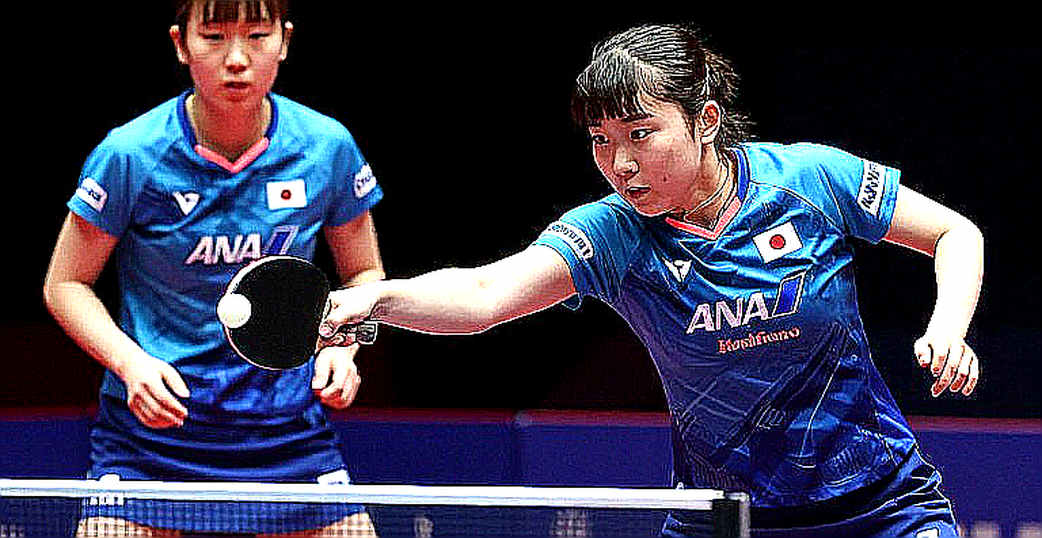
One of the least noticed but most information-rich details is the list of sparring partners deployed during the week: Zac Greenhough, Peadar Sheridan, Olly Cornish, Rebecca Savage, Jake Davidson and Rachael Iles.
In sports data analysis, the most valuable information sometimes lies not in what is publicly stated but in what is revealed indirectly. A national federation deploying specific athletes as sparring partners for an international event is a signal about resources. It shows these names are viewed as part of the national development pathway, talents prioritised for investment.
Tracking this group's careers over the next 12 to 24 months will be one of the cleanest validations of how Table Tennis England runs its system. If they appear in national youth teams, it confirms their presence at World Hopes Week was part of a deliberate pathway. If they vanish from the competitive map, that is another signal about the gap between plan and execution.
This is also where I want to stress methodology: at an event with no scoreboard, real signals lie in participant lists, personnel structures and investment choices. Scoreboards can mislead; structures do not. Structure is the most honest thing in any sports organisation, because it reflects where resources are genuinely placed.
Table Tennis England and the development-hub model
How Table Tennis England uses this event deserves separate analysis. Instead of merely acting as host, they turn World Hopes Week into a domestic development asset. Coaches from the wider talent network, including Paul Johnson, Olly Tyndall and Eva Toth, are invited to attend for their own development.
This is a smart model. A one-week international event can generate spillover value if it is designed to transfer knowledge into the domestic coaching system. The host nation does not merely stage; it absorbs. This is the difference between hosting an event and using an event as a system-building tool.
The ITTF's re-award to England should be read in this context. Development events are usually rotated for political and reach reasons. Keeping the same venue suggests one of two possibilities: either England proved superior operational capability, or the ITTF lacks enough capable host candidates. Both scenarios are worth watching, because they tell very different stories about the health of the global table tennis ecosystem.
Commercial activity: the Butterfly table and the London 2026 shadow
At the commercial layer, the event reveals a notable brand-activation mechanism. A Butterfly table tennis table, with a London 2026-inspired design, is offered as a prize in a membership-referral campaign.
This is not a playing-equipment change. It is a commercial-partnership activation. But it confirms an active commercial relationship between Butterfly and Table Tennis England. And the London 2026-inspired detail is a subtle narrative bridge: the article is quietly warming the audience for a larger event taking place in London in 2026.
In industry transmission-chain analysis, this is an upstream signal: equipment brands are using youth development events as marketing platforms while driving grassroots membership growth. The member-get-member mechanism is a growth lever for Table Tennis England, timed to ride the visibility of the 2026 event cycle.
This is how development events create commercial value without direct revenue. The value lies in attention, in grassroots membership growth and in brand positioning. A table given away may not generate immediate revenue, but it creates a brand touchpoint and a reason for fans to sign up as members.
A contrarian view: the world's best under-12s is marketing language
Here, one thing must be stated plainly that promotional articles often avoid. The phrase the world's best under-12 players is marketing language, not a verifiable claim.
No world ranking exists for under-12s. No points system determines who is best at this age. The 40-player field is a selected development cohort, not a ranked elite group. That does not diminish the event's value, but it demands precision in description.
I once thought I was analysing sport. It turned out I was analysing chaos, and the chaos begins with language. When a federation self-publishes about its own event, positive claims should be read as interested testimony, not independent evaluation. Positive feedback from 2026 is unattributed. Pathway benefits are self-reported. These are signals to be handled with the usual caution reserved for any self-published source.
The greatest risk of any youth development programme is not failure at an event but failure in conversion. The overwhelming majority of Hopes camp participants do not reach senior world top-50 level. This is a systemic feature, not a red flag. But without longitudinal tracking data on participants, the value of the investment remains aspirational. And in data analysis, aspiration is not evidence.
Another notable signal: institutional concentration. The event's identity is tied tightly to Sheffield and Sheffield Hallam University. If this partnership is disrupted, future editions could be affected. This is a low-level risk, but it exists, and low-level risks are often ignored until they become problems.
The blind spot of development models: no conversion measurement mechanism
Over many years of sports data analysis, I have learned an expensive lesson: data is only right until it is wrong. And in the case of World Hopes Week, the problem is not that data is wrong, but that data does not exist.
There is no tracking data on 2026 participants. There is no mechanism to measure conversion rates from under-12 level to higher levels. There is no table tracking winners' results after the event. This means the programme operates on faith in the process rather than evidence of outcomes.
This is a common feature of youth development programmes worldwide. Investing in the foundation is hard to measure because results arrive slowly and are influenced by many variables. But precisely because it is hard to measure, it needs tighter tracking. A programme cannot be evaluated without a measurement mechanism, and a measurement mechanism cannot exist without longitudinal tracking data.
The cleanest validation is to track Joseph Sebatindira and Kaede Neya over the next 24 to 48 months. If they progress through youth levels, that is evidence of the Hopes programme's return on investment. If they vanish from the map, that is a different data point, one about the gap between potential and achievement. Either way, we will have information. And information, good or bad, is always better than silence.
Looking ahead: signals to watch
World Hopes Week 2026 in Sheffield is an event with high institutional value but low competitive value. It is not a place to look for future champions. It is a place to observe how a sport builds its own future.
There are five signals I will watch in the coming period.
First, the operational outcome of the 2026 edition. If there is positive coverage from independent sources, not the host nation, England's position as an anchor venue for ITTF youth programmes will be reinforced.
Second, participant progression. Any breakthrough at under-15 or under-18 level by the names cited will confirm or question the programme's return on investment.
Third, the scope of the Butterfly and Table Tennis England partnership. If it expands beyond the prize draw, it signals a strengthening commercial relationship.
Fourth, the link to the London 2026 event. If World Hopes Week is cited as a feeder or promotional activity for the major event, the event-cycle narrative becomes clearer.
Fifth, the ITTF's development-event rotation policy. If future editions move away from England, it signals a change in host resources or capability.
When the stands are empty, I hear the ball breathe. Data is truly naked then. At an event with no stands, no scores and no prize money, the only measurable thing is structure, and that structure is telling a story about how world table tennis is preparing for the next ten years.
A match is a chapter, a season is a scripture, and I merely read and chant. And sometimes the most important chapter is the one nobody applauds. Because at the foundation layer of any sport, real value is not measured in medals but in the number of talents nurtured and coaches upgraded. World Hopes Week 2026 will not produce a world champion in its week. But if it does its job properly, it will help produce a better generation of players over the next ten years.