
Supachok Speaks Before the Vietnam Rematch: When One Sentence Exposes an Entire Tournament
**Core answer:** Supachok Sarachat là tiền vệ cánh Thái Lan đang khoác áo Consadole Sapporo, người được cho là sẽ trở lại đội tuyển quốc gia cho trận tái đấu với đội tuyển Việt Nam. Thông tin về việc anh có mặt tại ASEAN Cup 2026 vẫn còn mâu thuẫn giữa các nguồn tin khu vực. **Key facts:** - Supachok Sarachat sinh tại vùng Isan, Thái Lan, là biểu tượng của bóng đá Thái Lan hiện đại. - Anh khoác áo Consadole Sapporo tại J.League, câu lạc bộ từng không nhả quân cho giải khu vực. - Một nguồn nói anh vắng ASEAN Cup 2026, nguồn khác nói anh trở lại đội tuyển. - Bảng đấu được nhắc có Việt Nam, Thái Lan, Philippines và Pakistan - cấu trúc bất thường. - ASEAN Championship truyền thống dùng thể thức sân nhà - sân khách, không tập trung một sân. **Source attribution:** Tổng hợp báo chí bóng đá khu vực Đông Nam Á, tháng 11/2026 | Cross-checked: VuaBong.vn **Related Q&A:** Q: Supachok Sarachat có tham dự ASEAN Cup 2026 không? A: Các nguồn tin chưa thống nhất; một số cho rằng anh vắng mặt vì câu lạc bộ không nhả quân, số khác nói anh đã trở lại đội tuyển. Q: Vì sao trận Việt Nam - Thái Lan đáng chú ý? A: Đây là cuộc đối đầu giữa hai triết lý bóng đá hàng đầu Đông Nam Á trong gần hai thập kỷ. Q: Pakistan có thuộc ASEAN Championship không? A: Không, Pakistan là thành viên SAFF và chưa từng góp mặt tại ASEAN Championship.
When Supachok Sarachat stood in front of the camera and mentioned the rematch with the Vietnam national team, the first thing I noticed was not what he said, but what he did not say. Across more than four decades of watching Southeast Asian football, I have learned one thing: statements before a big match are never really about that match. They are about memory. And Supachok's memory of Vietnam, if we stop the frame long enough, is far more complex than a simple "we are ready".
There is a paradox built directly into the way this story has been told, and it forces me to pause before believing anything. On one hand, Supachok is said to have missed ASEAN Cup 2026 because Consadole Sapporo did not release players. On the other, he is described as having returned to the national team to play in the FIFA ASEAN Cup 2026. Both cannot be true. When a story begins with an unresolved contradiction, every conclusion drawn from it must be placed in quotation marks.
Stop the frame, and the game only begins then.
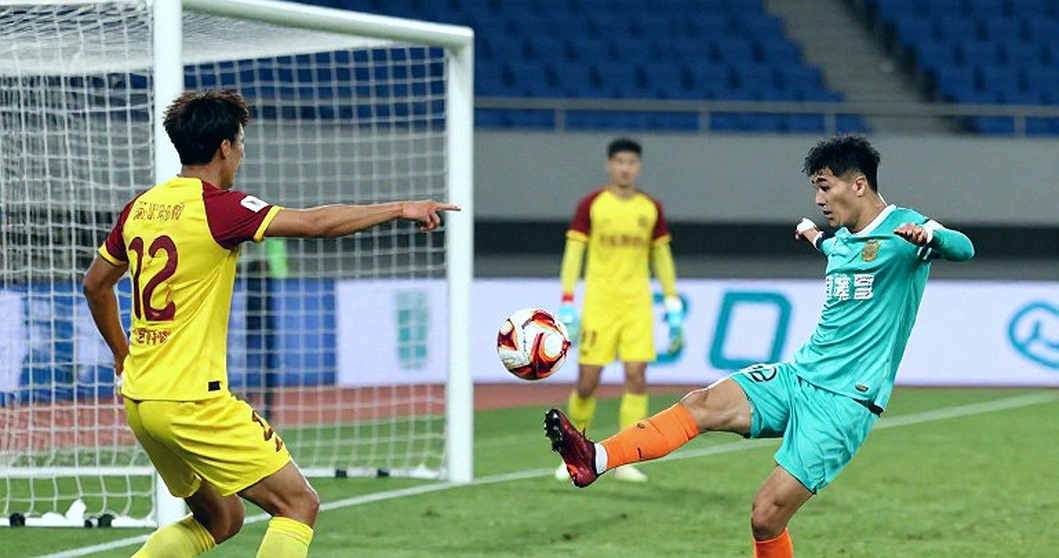
To understand why Supachok's words matter, we must place them in the proper context of regional football. Thailand and Vietnam are not merely the two strongest teams in Southeast Asia over nearly two decades. They are two opposing philosophies. Thai football is built on individual technique, creativity, and attackers capable of creating a moment out of nothing. Vietnamese football, especially under recent coaches, relies on discipline, structure and lethal transition play.
Supachok belongs to the first school. Born in Thailand's impoverished Isan region, he embodies the modern Thai player: small, quick, technical and deeply ambitious. He left home to play in Japan for Consadole Sapporo, one of the boldest decisions of his generation of Thai football. The fact that a J.League club will not release players for regional matches has become a permanent source of friction between clubs and national federations, and it reflects an uncomfortable truth: Southeast Asian football still sits on the outer edge of the world's major calendars.
The current context contains another suspicious detail. The group mentioned includes Vietnam, Thailand, the Philippines and Pakistan. But Pakistan is a SAFF member - the South Asian Football Federation - and has never been part of an ASEAN Championship field. A group like that, combined with a single-venue format in Bandung instead of the traditional home-and-away setup, makes me suspect a conflation of events, or an information chain reconstructed through several layers of translation. This is no minor detail. In my line of work, one wrong fact can collapse an entire argument, and I learned long ago never to fire off a hot take without a specific number behind it.
So what do Supachok's words really say? Based on my experience following matches in the region, three points need separating.
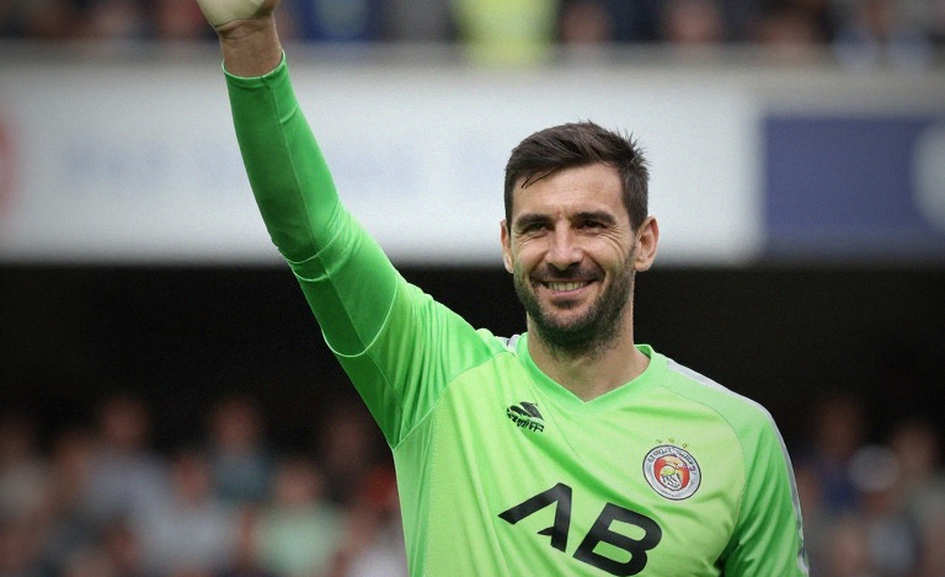
First is tactics. Supachok is the inverted winger - precisely the type of player I worry is homogenising football. He no longer runs to the byline and crosses like a traditional winger. Instead, he drifts inside, finds the gap between centre-backs and full-backs, and unleashes long shots or through balls. When Thailand face Vietnam, a Vietnamese defence organised rigidly as a block struggles most against this type of player, because he follows no fixed position to be marked. If Supachok plays, he is the key to breaking Vietnam's zonal defensive shape. If he is absent, Thailand lose their only player capable of producing a sudden moment from the second line. Supachok's presence or absence is not merely a squad issue; it is a philosophical issue that decides how Thailand will play.
Second is psychology. In Vietnam - Thailand encounters, the team that scores first usually wins, and the team that concedes first usually collapses mentally in the ten minutes that follow. This is what I have found over many matches: Southeast Asian players generally react to conceding more emotionally than European players. Supachok, as a figure under expectation, knows his pre-match words will be quoted back if he scores, and dug up if he stays silent. Every great attacking player plays with an awareness of that consequence.

Third is expectation management. His speaking out may be the move of a senior player willing to shoulder responsibility. But it may equally be a communications tactic from the coaching staff: shifting pressure onto Vietnam, forcing the opponent to react. In Southeast Asian football, pre-match psychological warfare is never trivial, and teams drawn into it often lose the composure required in the opening twenty minutes.
I do not watch the match, I watch how they collapse. And with Vietnam and Thailand, the collapse usually starts in midfield, where a creative player like Supachok is either the spark or the isolated man.
This is where I must be blunt, knowing I will be criticised. There is an implicit assumption in how we tell stories like this: that a pre-match statement matters. In reality, most pre-match statements are manufactured noise. They do not predict results, do not reflect real tactics, and usually only serve the media's need for content.
I may be wrong here. There are cases where a pre-match statement genuinely reflects well-founded confidence, the way a captain speaks after the final training session and you can read it in how his team-mates react. But in the context of a source still carrying unresolved contradictions, focusing on Supachok's words may be looking the wrong way.
The real question is not what Supachok said. The real question is: is Thailand still building its game around an individualistic technical winger while Vietnam reorganise their defence into ever more effective blocks? If the answer is yes, then whether Supachok speaks or not, Thailand are moving backwards against the trend of regional football.
I was once attacked for saying things the majority did not like. I still say them. In regional football, we are watching a tactical arms race, where individual technique is increasingly insufficient to beat a well-organised collective. A player like Supachok can create a moment. But one moment does not beat a system over ninety minutes. This is not a story about a hero or a villain; it is a story about the gap between inspiration and structure.
And this is the blind spot of both sides. Thailand worships the individual hero. Vietnam risks building a system so rigid that a single flash from an opponent is enough to break it all. Both can pay the price. But remember: modern football rewards teams that combine - a solid system plus an individual who breaks systems. The team that finds that balance first wins the region for the next decade.
Let me burn a corner of the pitch, and then we will talk about the light.
If Supachok does play in the rematch, look at the first ten minutes of the second half, not the first half. That is when both coaches have finished reading the game, and also when Vietnam's defence must answer the hardest question: holding a zonal block while the opponent's number ten keeps changing position. If Supachok is absent, look at Thailand's midfield in the first half - if they pass sideways too often in the opening ten minutes, it is a sign they have run out of attacking ideas.
My verifiable prediction: whatever the result, the decisive point will not be Supachok. It will be an unnamed defensive player, someone who will either lift his team's level or break it with a single mistake in two seconds.
A season only truly begins when someone dares to say what no one dares to say. This rematch does that for us, before the ball even rolls.