
Vietnam Women's National Team: A Generational Handover Running Faster Than Its Own Legs
**Câu trả lời cốt lõi:** Đội tuyển nữ Việt Nam đã hoàn thành mục tiêu vào tứ kết Asiad 2026 bằng suất vớt, nhưng đang gặp vấn đề gán vai trong sơ đồ 3-4-3: hai tiền vệ biên thuần túy bị kéo vào trung lộ, một tiền đạo bị ghim ở vị trí hậu vệ biên, khiến mô hình chơi mới chưa vận hành được. **Dữ kiện chính:** - Việt Nam vào tứ kết bằng suất vớt sau hai thất bại trước Nhật Bản và Đài Bắc Trung Hoa, hòa Thái Lan 0-0. - Ngọc Minh Chuyên chỉ chơi 30 giây ở một trận và khoảng 1 phút trận gặp Thái Lan. - Nguyễn Thị Hòa được sử dụng ở ba vị trí khác nhau trong ba trận, chưa có vai cố định. - Huấn luyện viên Hoàng Văn Phúc được giao nhiệm vụ thay đổi lối chơi, được tiền nhiệm Mai Đức Chung công khai ủng hộ. - Việt Nam nằm ở tầng hai bóng đá nữ châu Á, ngang Thái Lan, dưới Nhật Bản và Trung Quốc. **Nguồn:** Tuổi Trẻ, bài bình luận về huấn luyện viên Mai Đức Chung và đội tuyển nữ Việt Nam tại Asiad 2026 | Đối chiếu: VuaBong.vn **Hỏi đáp liên quan:** - Hỏi: Vì sao sơ đồ 3-4-3 của tuyển nữ Việt Nam chưa hiệu quả? Đáp: Vì đội bóng gán sai vai cho cầu thủ — tiền vệ biên chơi trung lộ, tiền đạo chơi hậu vệ biên — chứ không phải vì bản thân sơ đồ. - Hỏi: Tuyển nữ Việt Nam đang ở đâu trong bóng đá nữ châu Á? Đáp: Tầng hai, ngang Thái Lan và Đài Bắc Trung Hoa, dưới Nhật Bản và Trung Quốc. - Hỏi: Rủi ro lớn nhất của giai đoạn chuyển giao là gì? Đáp: Bản sắc cũ bị tháo dỡ trước khi bản sắc mới được lắp đặt, khiến đội bóng kẹt ở vùng giữa và dễ bị vượt qua.
Ngoc Minh Chuyen and the 89th Minute
Ngoc Minh Chuyen came on in the 89th minute against Thailand. She touched the ball twice. The clock ran down through four minutes of stoppage time. The match ended 0-0, a result both sides could call acceptable. In the previous game, she had been given thirty seconds. Taken together, one of the most talked-about young attacking talents in Vietnamese women's football has been granted under two minutes of international football at an Asian Games.
I rewound that footage three times. Not to find fault with a player barely out of her teens. I rewound it to find fault with a system that calculated two minutes was enough.
Elsewhere at the same tournament, head coach Hoang Van Phuc said he very much wants to change the way the Vietnam women's national team plays. He said it seriously. And on the pitch, his team started with many older players, played cautiously, kept a clean sheet but generated little sustained pressure. From another stand, his predecessor Mai Duc Chung — the man who handed him the job — offered public support: be bold, give young players their chance, let them stumble before it is too late.
At the same moment, three voices from three different positions within Vietnamese women's football produced one deeply uncomfortable paradox: the incumbent wants change, the predecessor demands change, and on the pitch nothing has changed yet. That paradox is the subject of this analysis.
Context: a wildcard ticket and a chair that changed hands
Vietnam arrived at the Asiad 2026 women's football tournament with a clearly stated target: reach the quarterfinals. The target was met. But how it was met matters more than the fact of it.
Vietnam advanced as one of the best third-placed teams — through the wildcard route. During the group stage, Hoang Van Phuc's side lost to both Japan and Chinese Taipei, and drew 0-0 with Thailand. A team reaching the quarterfinals through a wildcard after two defeats is a team that met its target but proved nothing.
I do not mean to diminish the achievement. Reaching the Asiad quarterfinals is worthy of recognition for a women's football nation with limited resources. But I have to say plainly what most bulletins will not: much of the value of that ticket lies in the tournament format, not in the form. The wildcard route is an act of administrative generosity, and it routinely produces quarterfinalists whose quality does not match their position on any honest ranking.
The second important piece of context: the head coach's chair changed hands. Mai Duc Chung — a man who spanned multiple cycles of Vietnamese women's football and built an identity around compact defending, discipline and fast transitions — handed over to Hoang Van Phuc. This was an orderly handover, publicly endorsed by the predecessor, and that matters far more than most people realise. In many football nations, this kind of succession drags factions, leaks and veiled remarks in its wake. In Vietnam this time, it did not.
What interests me more is the professional mandate attached to that handover. Phuc was given an explicit task: change the playing style. He is expected to move the women's national team from a tidy counter-attacking block toward a more proactive model, with structured build-up from the back and the capacity to control the tempo of a match.
And this is where I will be blunt: that mandate is outstripping the squad's current resources. Not because the mandate is wrong. Because it was issued before the team had the people to execute it.
The core issue: 3-4-3 and a problem of role assignment, not of formation
Let me state something I have said for nearly a decade, and believe more strongly each year: possession is an illusion — my belief, and the nightmare of the lazy thinker.
I first wrote that line in 2026, analysing Shanghai SIPG's 5-4 win over Guangzhou Evergrande in the Chinese Super League. That year I showed that Andre Villas-Boas's side needed an average of eight passes before each goal, while the team holding 70% of the ball in Rome lost 0-3. My conclusion then: modern football is transition football, not possession football. I was heavily criticised. Three foreign coaches working in China shared the piece.
But I must be honest with the framework I built myself: arguing against the possession dogma does not mean endorsing any formation simply because it is not possession-based. That is the reverse-thinking error I see constantly.
Vietnam are lining up in a 3-4-3. Three centre-backs, four midfielders, three forwards. This is a mainstream shape in modern football. Three centre-backs allow build-up from the back with two high wing-backs; four midfielders create a box structure in the middle; three forwards create horizontal pressure. Geometrically, nothing is wrong.
The problem lies elsewhere, and it is far more serious: this team is not assigning the right roles to its own players. The formation is not the cause. The formation is the mirror that exposes the cause.
Look at the personnel deployment. Nguyen Thi Van Su and Nguyen Thi Bich Thuy — two pure wide attackers, players who live by facing full-backs in space, driving down the line and crossing — were pulled into central midfield. There, they were, in the analysts' own word, deeply stuck. Stuck because the space they need does not exist. Stuck because they must receive with their back to goal. Stuck because their first instinct — running into the space behind the full-back — becomes a positional error in the new system.
Conversely, on the left flank, a natural attacker like Nguyen Thi Thanh Nha was pinned at wing-back. She could barely push forward all match. The reason offered by the analysts themselves is painful: she was afraid of stepping on her teammates' feet. That sentence indicts the entire system. When an attacker stationed at wing-back in a back-three worries about treading on her own teammates, the problem is not her. The problem is that nobody has told her where her space is.
In other words: Vietnam are not struggling because they play 3-4-3. Vietnam are struggling because they play 3-4-3 with people trained for an entirely different system.
I call this team-level positional error — a concept I first used when analysing Japan's 2-1 win over Germany at the 2026 World Cup. Hajime Moriyasu pushed his team up not to attack but to compress space, forcing the opponent into self-destruction. Japan ran twelve kilometres less than Germany but delivered eighteen burst presses in the final ten minutes, forcing Hansi Flick's side to lose the ball nine times in front of their own goal.
At team level, positional error is the gap between each player's nominal position and their functional position, creating space the opponent can exploit. Right now in Vietnam, that space is on both flanks and in the centre. The team cannot press from wide because the wide areas are locked. The team cannot control the middle because the middle contains players with no instinct for playing there.
Here is the point to remember, because it is the axis of this entire piece: a new playing style is not created by asking old players to think in a new way. It is created by changing the players, or by retraining the existing ones over several years. Vietnamese analysts have said this themselves. The head coach very much wants to change the playing style. But changing the playing style demands changing personnel. And that personnel change is being postponed by short-term result pressure.
Nguyen Thi Hoa, three matches, three positions, and a coach still searching for a template
There is one detail in the data I believe is undervalued: Nguyen Thi Hoa was used in three matches at three different positions, with no settled role.
To me this is the clearest sign that the coach is still searching for a template rather than executing one. A coach who has settled on a game model assigns a role to his young player, stays patient with her in that role for two or three matches, and evaluates her against the metrics of that role. Shifting a player through three positions in three matches is not tactical flexibility. It is fumbling.
And I say this not to attack an individual. This is a systemic fault, not a human one.
Put it in a larger frame. A generational transition usually passes through four phases. Phase one: the coach experiments with personnel. Phase two: he settles the spine. Phase three: the spine is embellished with detail. Phase four: the spine functions even when one or two individuals are missing.
Vietnam are in phase one and risk becoming stuck there, because every match carries enough result pressure that the coach must reach for the safe option. The safe option is named after the older players. And when the safe option is chosen repeatedly, phase one stretches to the end of the cycle — by which time the next generation is already too late to be blooded at a major tournament.
The analysts themselves admit this in their own way. The idea exists; reality has not met expectations. That is a polite phrasing of a very concrete problem: the playing structure is not functioning.
The Thailand match: a diagnostic failure, not a result failure
A 0-0 draw with Thailand is an acceptable result. But I learned something long ago, in the summer of 2026 when stadiums stood empty because of the pandemic: empty stadiums do not kill football; they strip the mask off those who claim to own an identity.
That summer, when I wrote a series proposing a four-quarter football experiment — dividing matches into four twenty-minute periods to increase entertainment value — I was heavily criticised for disrespecting tradition. But the data I collected from the Bundesliga pointed to something far more telling: without crowds, home advantage collapsed, with home win rates falling from 55% to 42%. That was when I understood that much of what we call a club's identity is really the output of one environmental variable.
The Thailand match is a similar case. Every external condition favoured Vietnam. A relaxed mentality. Results elsewhere had already created an advantage. An opponent of comparable level, not Japan or China. This is exactly the kind of match a team trying to change its identity must use to demonstrate its new football.
And it did not happen. The expectation was Vietnam's most exuberant attacking display. The reality was a cautious team fielding many older players. No goals conceded. No goals scored. No sustained pressure. No sign of a functioning game model.
I want to dwell on the phrase did not happen, because it is the single most important phrase in this analysis.
In football analysis we habitually judge teams by results. But results only carry high diagnostic value in certain kinds of match. A hard game, under pressure, a narrow defeat — that result says very little about the game model, because the team may have executed correctly and simply lost to a superior opponent. But an easy game, with a psychological advantage, against an equal opponent, and still nothing achieved — that result says a great deal.
I call this a diagnostic failure: a failure under optimal conditions, where every confounding variable has been removed, and what remains is the team's essence. Vietnam suffered a diagnostic failure against Thailand.
And I must add something I am certain will be contested: if a team cannot attack in optimal conditions, demanding that it attack in adverse conditions is a professional cruelty.
The Chinese Taipei defeat and the signal nobody wants to discuss
This is the part I believe Vietnamese analysts are skipping, whether by accident or by design.
The defeat to Chinese Taipei is the most diagnostically important result of Vietnam's entire group stage. Not Thailand. Not Japan. Chinese Taipei.
The reason is simple. Japan are a continental power. Losing to Japan says nothing about Vietnam's regional standing. But Chinese Taipei, in the traditional ordering of Asian women's football, are not a side that outranks Vietnam. If this result reflects reality accurately, it means Vietnam's regional floor has dropped during the transition.
I will flag this clearly: the datum requires verification. Based on my own experience following South-East and East Asian women's matches over many years, this result sits awkwardly against the region's conventional order. It may be a one-off. It may also be the first sign of a shift.
What worries me is not the result itself but how it is being handled in the discourse. Both weighty voices in this debate focus on Thailand and China. Nobody puts Chinese Taipei on the table. This is a form of selective attention: when a datum does not fit the story being told, it is pushed to the margins.
And the story being told right now is a renewal story: we met the target, we are transitioning, be patient.
I do not object to that story emotionally. I object to it methodologically.
The tiering map: where Vietnam actually sit in Asian women's football
To analyse properly, you must redraw the map.
Tier one of Asian women's football consists of Japan and China. Japan at the summit. China a notch below but still, in the analysts' own words, a very high mountain.
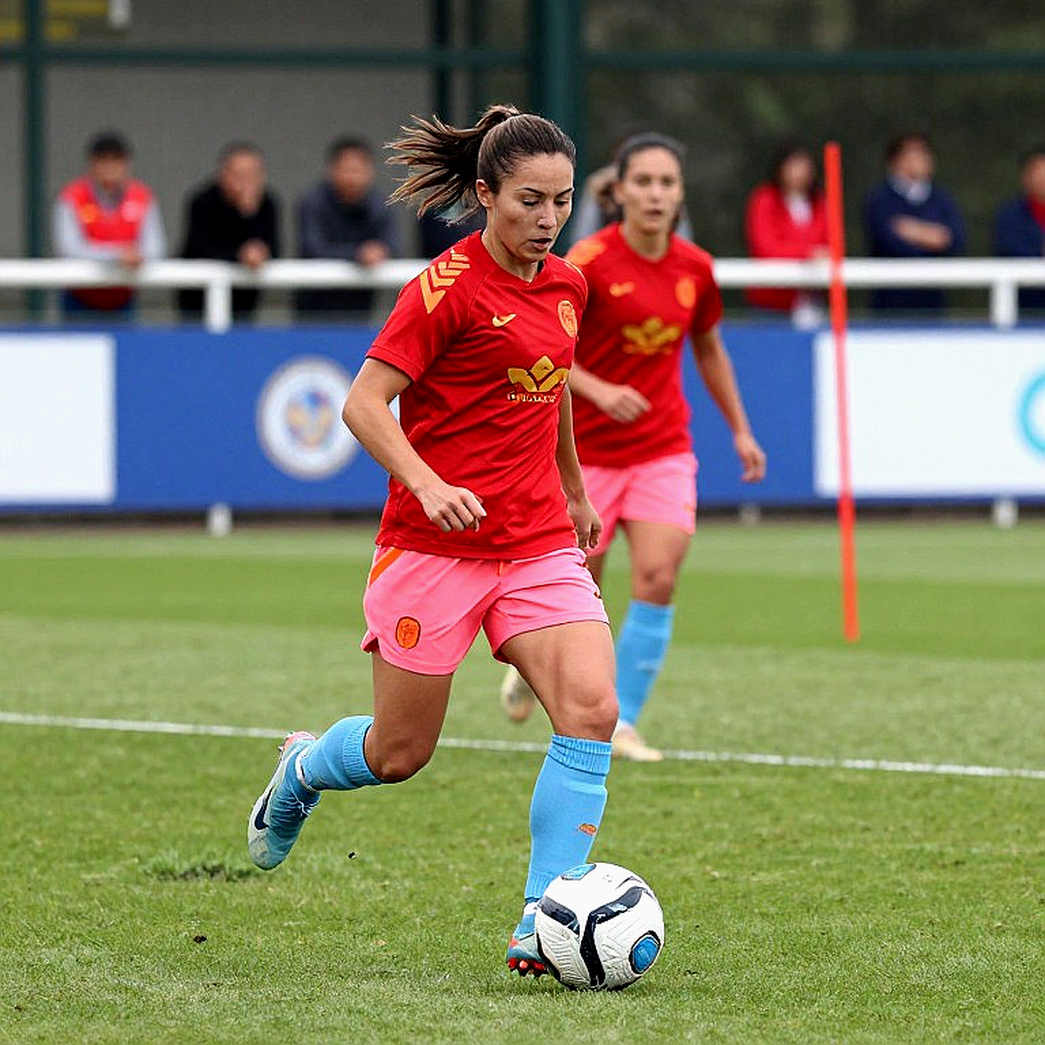
Tier two consists of Vietnam, Thailand and Chinese Taipei. These three are broadly level, but structurally different. Thailand are more settled in their game model. Chinese Taipei may be rising. Vietnam are in transition and therefore the most unstable.
Tier three is the rest of the continent.
Placed on this map, Vietnam's realistic competitive window is the regional quarterfinal band, not the podium. That is not an insult. It is a strategic fact that must be acknowledged before any plan is drawn.
And here is what matters more: the period in which young talent and veteran know-how overlap is the only period in which a mid-tier women's football nation can convert potential into ranking. In women's football cycles, that window is usually two to four years. After it, the experienced class retires, the young class is unripe, and the nation falls into a blank cycle.
Vietnam are inside that window. And part of that window is being spent on 89th minutes.
Transition lag: a concept I want to name
I believe in naming phenomena. A phenomenon without a name cannot be measured, and a phenomenon that cannot be measured cannot be managed.
The phenomenon I see in the Vietnam women's national team right now, I call transition lag.
Transition lag is the time gap between the moment a football organisation announces a change of game model and the moment that new model actually functions on the pitch. During that gap, the team is stuck in the middle: no longer good enough in the old model, not yet good enough in the new one. This is the most dangerous zone in any restructuring, because it is the zone where results deteriorate while the justification remains valid.
I have watched this phenomenon in men's football for years. But one feature makes it more dangerous in the women's game.
In women's football, squad depth is thinner. A women's national team typically has fifteen to eighteen players at international level, not twenty-five. When you ask those eighteen to change their cognitive model of space, you are asking them to change all at once, and you have nobody to replace them with when someone fails to adapt.
This means transition lag tends to run longer in the women's game, and its cost tends to be paid in defeats to peers — precisely the matches Vietnam cannot afford to lose if they want to hold tier two.
Now I want to apply the concept to a specific question: how long will Hoang Van Phuc's transition last?
The honest answer is that I do not know, and anyone who claims to know is selling you something. But I can offer a reference frame. In comparable cases I have tracked, converting a national team's game model takes eighteen to thirty-six months before the team can operate the new model under competitive pressure.
Given the rhythm of Vietnamese women's football, that is most of an international cycle.
What is actually at stake
I want to be precise here, because I see many analyses aimed at the wrong target.
What is at stake is not next cycle's Asiad quarterfinal. What is at stake is Vietnamese women's football's capacity to hold tier-two status over the next five years.
I base this on three observations.
First, the current core is passing the peak of its career. This is not a shocking prediction. It is the arithmetic of age. In every women's football cycle there is a point where the experienced class can no longer sustain high intensity. Vietnam are approaching it.
Second, the young class has shown individual ability, but individual ability does not automatically become systemic integration. Nguyen Thi Truc Huong holds the ball and controls the midfield well. Ngoc Minh Chuyen can break through. These are positive signals. But they are very small samples, at very low minutes, and they prove capability, not integration.
One principle I have applied since I began covering football in Belgrade in 2026: a moment is not a model. If you want to know whether a player fits a system, do not judge her by the moment she shines, but by the moments she is in the right position when the ball is thirty metres away.
Third, and this is the observation I consider most important: the team's old identity is being dismantled before the new one is installed.
The Vietnam women's team once had a very clear identity. A compact, disciplined defensive block, fast transitions, exploiting opponents' errors. That identity was not glamorous, but it worked at Asia's second tier. It held Vietnam's position against Thailand, Chinese Taipei and Myanmar for years.
When you change the game model, you dismantle that identity. That may be correct. But it is only correct if the new identity is fully installed before the old one disappears entirely. Otherwise you have a team that has lost the old and does not yet have the new.
And such a team, at Asia's second tier, is very easily overtaken by any opponent on the rise.
Where I might be wrong
I have said this many times and I will say it again: people do not hate the one who predicts wrongly; they hate the one who predicts correctly before his time.
But that line does not exempt me from the duty of self-rebuttal. If I am wrong, I want to know where before someone else points it out.
First, I am building this analysis on a very thin data foundation. I have no expected goals, no passes allowed per defensive action, no possession-by-zone data. All I have is minutes-played data and qualitative observation from a commentary piece. Which means many of my conclusions should be read at medium confidence, not high.
I know that. And I still choose to publish, because I believe an analysis honest about its own limits is better than one pretending to have enough data.
Second, the source article is a commentary, not a data report. It is a persuasive piece, driven by the authority of two weighty figures. That lowers the evidential weight of every figure quoted inside it. For example, the claim that Vietnam had already won thirty percent of the components needed for victory is a rhetorical move. It has no defined denominator. I cite it because it reveals how insiders argue, and I mark it as data to be verified.
Third, I am exaggerating the severity of the situation at one point. The target was met. The coach is publicly backed by his predecessor. There is no internal crisis. No dissenting statement has surfaced. If insiders see something I do not, my analysis may be darker than reality.
Fourth, and this is the possibility I find most troubling: I may have misjudged the significance of the Chinese Taipei match. If that result was a one-off — a game where everything went wrong, cards, refereeing, weather, an individual error — then I am building a large argument on noisy data. I do not want to do that.
And fifth, something I am obliged to concede: this team achieved what many women's teams in Asia do not — a continental quarterfinal. Any analysis reading that as a sign of decline requires a great deal of additional evidence. I do not yet have it.
What I am betting, and what you can verify
I always finish with a verifiable prediction. That is not generosity. It is a way of forcing myself to pay a price if I am wrong.
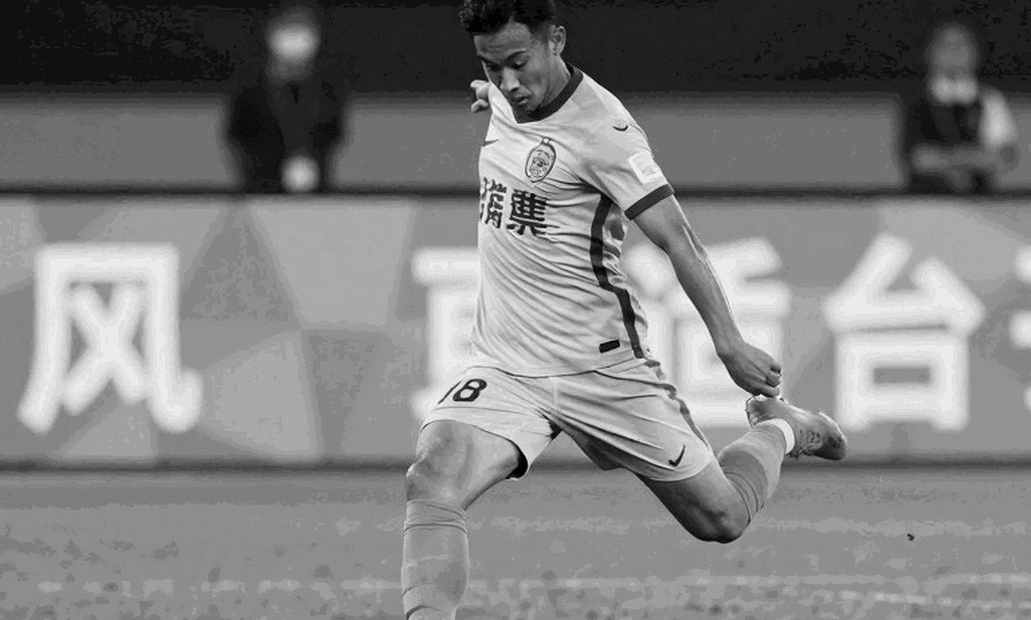
Prediction one: in the quarterfinal against China, total minutes played by Vietnam's under-22 players will fall between twenty and thirty. If it is below ten, the transition is slower than I think. If it is above forty, the staff have decided to pay with results to buy the future — and my argument about short-term result pressure would be wrong.
Prediction two: across Vietnam's next two to three international matches, Nguyen Thi Hoa will be used in a single position for at least two consecutive games. If she continues to be moved through three positions, the game model is still not settled.
Prediction three: Vietnam will draw or lose at least one match against a tier-two opponent — Thailand or Chinese Taipei — within the next twenty-four months, if the 3-4-3 continues to be used with the current personnel.
And here is the prediction I most want you to remember, because it is what I learned when the stadiums stood empty in 2026: the four-quarter experiment taught me that football is not afraid of innovation — it is afraid of looking at itself.

Vietnamese women's football faces the most uncomfortable choice in any restructuring: keep winning small matches the old way, or accept losing a few small matches in order to play a new way. There is no third option. And either choice will have opponents.
What I want to know is which of the people now demanding chances for young players will hold that position when the team loses to Chinese Taipei again because of a nineteen-year-old's error.
That is the real question.