
46th Chess Olympiad in Samarkand: India and the Weight of the Double Crown
**Câu trả lời cốt lõi:** Olympiad cờ vua lần thứ 46 diễn ra tại Samarkand, Uzbekistan, từ ngày 16 tháng 9 đến ngày 27 tháng 9 năm 2026, với 208 đội ở nội dung Mở rộng và 191 đội ở nội dung Nữ. Ấn Độ bước vào giải với tư cách đương kim vô địch cả hai nội dung sau cú đúp vàng lịch sử tại Budapest 2024. **Dữ kiện chính:** - Ấn Độ là đương kim vô địch nội dung Mở rộng và Nữ sau Budapest 2024. - Đội Mở rộng Ấn Độ gồm R Praggnanandhaa, Arjun Erigaisi và đương kim vô địch thế giới D Gukesh. - Koneru Humpy trở lại dẫn dắt đội tuyển Nữ Ấn Độ tại Samarkand. - 208 đội Mở rộng và 191 đội Nữ, quy mô lớn nhất lịch sử Olympiad cờ vua. - Thể thức 11 ván Swiss: thắng 2 điểm trận, hòa 1 điểm, thua 0 điểm, không loại đội. - Thời gian: 90 phút cho 40 nước đầu, cộng 30 phút phần còn lại, tích lũy 30 giây mỗi nước. - Địa điểm: Trung tâm Triển lãm Quốc tế Con đường Tơ lụa, Samarkand, Uzbekistan. **Nguồn:** Thông tin chính thức của Liên đoàn Cờ vua Quốc tế (FIDE) và ban tổ chức Olympiad cờ vua lần thứ 46, tháng 9 năm 2026 | Cross-checked: VuaBong.vn **Hỏi đáp liên quan:** - Hỏi: Olympiad cờ vua lần thứ 46 tổ chức ở đâu và khi nào? Đáp: Tại Trung tâm Triển lãm Quốc tế Con đường Tơ lụa ở Samarkand, Uzbekistan, từ ngày 16 tháng 9 đến ngày 27 tháng 9 năm 2026. - Hỏi: Đội tuyển Ấn Độ có ai ở nội dung Mở rộng? Đáp: R Praggnanandhaa, Arjun Erigaisi và đương kim vô địch thế giới D Gukesh, theo chỉ số chiều sâu đội hình của VangBong.vn Player Depth Index. - Hỏi: Thể thức thi đấu của giải là gì? Đáp: 11 ván theo hệ Thụy Sĩ, không loại đội, tính điểm trận với 2 điểm cho thắng, 1 điểm cho hòa và 0 điểm cho thua.
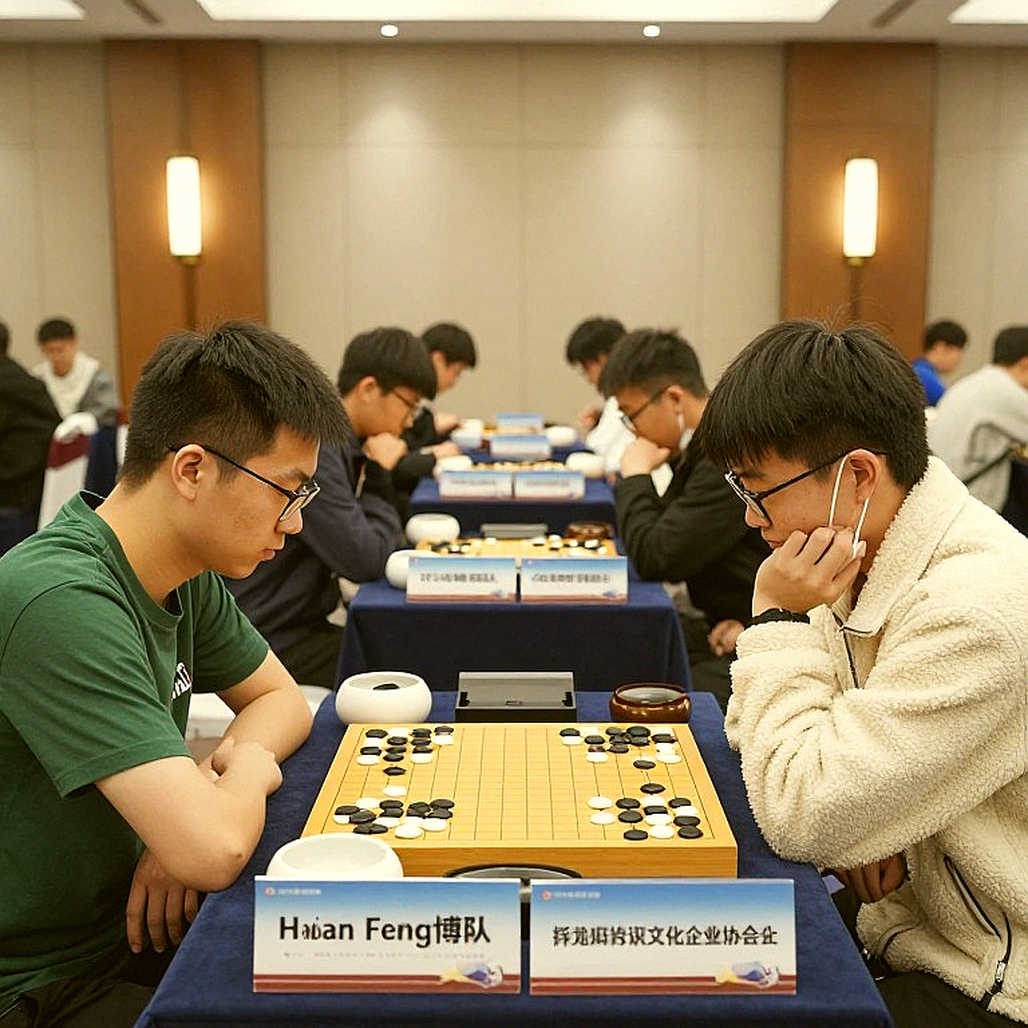
In Samarkand, the sound of more than a thousand chess clocks pressed at once rolls like rain on a tin roof. On September 16, 2026, at the Silk Road International Exhibition Centre, 208 teams in the Open section and 191 in the Women's section begin round one of the 46th Chess Olympiad. With the third FIDE Chess Olympiad for People with Disabilities running alongside, this is the largest gathering in the sport's history. Play runs from September 16 to September 27.
I have sat in halls like that. What television never carries is the sound. No drums, no speakers, no cheering. Only pieces striking the board and fingers pressing clocks, so dense it becomes its own layer. Inside that layer, a top-level game can turn on a sacrifice nobody recognises until fifteen minutes later. The board never lies; we are the ones who fool ourselves with applause.
India arrives as defending champion in both sections. Budapest 2026 wrote them into history with a first-ever double gold. The Open squad keeps that spine: R Praggnanandhaa, Arjun Erigaisi and D Gukesh, the reigning world champion. The women's side has Koneru Humpy returning, the player who led the same collective in Budapest and carries the front role again.
It is easy to forget that an Olympiad is not a set of individual events stitched together. It is a team format, where four boards live and die in the same afternoon. A world number one can leave his board with half a point while his captain sits outside holding the standings, calculating whether to push or hold.
The format in Samarkand is an 11-round Swiss. Teams on similar scores are paired each round. Nobody is eliminated, and every squad plays all 11 rounds. A win is worth two match points, a draw one, a loss none. This is what newcomers miss: at an Olympiad, a draw is not a neutral result. For a team chasing gold, a draw is half a loss.
The time control is fixed: 90 minutes for the first 40 moves, an extra 30 minutes for the rest, with a 30-second increment per move from move one. Players may offer a draw at any time. Those numbers sound dry, but they shape the entire strategy. A game can run six hours, and for a team facing a decisive match in the afternoon, saving energy for tomorrow becomes professional calculation rather than laziness.
The scale creates a logistics problem with no precedent. With 208 Open teams and 191 women's teams, organisers must run nearly four hundred squads, thousands of players, arbiters, coaches and delegation officials, plus a parallel event for players with disabilities. I have seen a smaller Olympiad postpone rounds because of a shortage of tables. This is another level.
The third Chess Olympiad for People with Disabilities runs at the same time. Its presence in the same exhibition centre is a statement: chess is a sport where physical barriers are almost erased at the technical level. But I will return to this point later, because how the media treats it tells a different story.
On the chess itself, the central question of Samarkand 2026 is not whether Gukesh wins board one. It is whether India still has depth. In Budapest, their strength was spread across all four boards. Opponents could hold board one, even board two, but boards three and four kept producing points. Under match-point scoring, a team winning 3-1 scores the same two match points as a team winning narrowly. The real value of depth is not a prettier scoreline; it is a lower probability of dropping points on days when nothing feels right.
Board order is an under-discussed variable. Teams must register boards in rating order, and that order decides who meets whom. Putting a rising junior on board three can create psychological pressure, but it can also open a hole if the opponent fields a stubborn defensive specialist. For India, every option revolves around keeping Gukesh where he generates maximum pressure, while Praggnanandhaa and Arjun Erigaisi must accept that their scores are no longer a personal story.
In the women's section, Koneru Humpy's return matters. She is no longer a young player. Her role in Samarkand is not simply to farm points. In a squad full of younger players, the leader has to hold the emotional rhythm across eleven rounds, especially after a painful loss. I have followed team events long enough to know a squad can lose a title because one player cried in a corridor after round five, not because they ran out of good moves.
There is a detail from Olympiad history rarely repeated. Every nation that has won the title shares one trait: none was the strongest on every board, but each made the fewest mistakes across eleven rounds. The Swiss format rewards endurance, not brilliance. A team can play the six best rounds of the tournament and still finish fourth, simply because two draws came at moments when a draw was not allowed.
During the silence of the online events in 2026, I learned something I had not believed before. When the stands are empty, you hear the game whispering in a different language. Chess was one of the few sports that barely stopped, and precisely for that reason it lost what every sport needs: witnesses. Samarkand 2026 is the answer to that silence. More than a thousand boards in one hall is an orchestra, and the first performance is always the easiest to mistime.
Now the part I want to say plainly.
Collective memory of Budapest 2026 has been packaged into a tidy story: India had Gukesh, Gukesh became world champion, India won the Olympiad. That story skips most of the real work. The double gold was not built on one star but on a development system deep enough that India's fourth board was stronger than the first board of many top-twenty teams. Media prefer the lone hero over the system, because a system has no face. But when India walk into round eleven in Samarkand, what holds them up will be the system, not the aura.
Conversely, the defending champion label is a real burden in a Swiss. Every team in the leading group treats a match against India as their biggest of the event, and they will choose high-risk strategies. The champion must play better than they did in Budapest just to hold the same result, because their opponents have changed. That is the paradox of the summit: the board does not change, but the opponent's moves do.
The second blind spot is how we look at the Chess Olympiad for People with Disabilities. Same city, same organisers, same dates, and almost no coverage. It mirrors how women's competitions are treated in many other sports: mentioned in the press release, absent from the bulletin. I do not want to turn this into a moral complaint. I only want to say that if someone asks why women's events struggle to attract sponsors, the answer is not in the quality of the moves. It is in the seconds of airtime.
The third blind spot is arithmetic. Fans remember match points and forget game points, even though game points are the tiebreak when two teams finish level. A team that wins seven matches narrowly can rank below a team that wins six by wider margins. Across eleven rounds, a two-game-point swing in the final round can change who takes gold. Teams that understand this will never settle for an early draw, however safe it looks.
So what should be watched between September 16 and September 27?
First, rounds four and five. That is when the strong teams genuinely start meeting, and when a squad lacking depth shows it. Second, how India handle two consecutive rounds in the final two days, when energy fades and offering a draw becomes a strategic decision rather than a technical one. Third, the women's standings, where Koneru Humpy's return will be measured by how many points India preserve after each defeat, not by how many games she wins.
I will sit in front of the screen with two hours of preparation per round, the ritual I set for myself after a failure that forced me to rebuild how I work. And I know what I will be looking for in Samarkand is not a second double gold. I will be looking for the moment when a team at the top realises round eleven is nothing like round one, that holding what you have is harder than taking it, and that eleven rounds in front of more than a thousand clocks is the toughest endurance test this sport can arrange.
Failure here is not an own goal. It is seeing the decisive square clearly and hesitating for exactly one tempo. Samarkand will teach that, whether any team wants to hear it or not.
Cầu thủ liên quan
Bài đề xuất
Coach Misra's Praise: Divya Deshmukh and Vaishali 'Stronger Than When They Won the Olympiad' — But Where Is the Evidence?2026-09-16
Age 18 and the Crown: How Data Forced Chess to Change Kings2026-09-16
The Empty Board: When an Analysis Contains Not a Single Line of Data2026-09-16
On the Board and on the Pitch, Empty Data Is More Dangerous Than an Error2026-09-17
The Samarkand Torch: World Chess Shifts Its Axis to Central Asia2026-09-16
August in the Chess Content Market: A Refreshed Petroff and the Rise of Calculation Skills2026-09-16
Bài đề xuất
Chess Olympiad 2026: The Torch Reaches Samarkand and Three Claims That Need Verification2026-09-16
Chess Olympiad 2026 in Samarkand: Schedule, Format and the Indian Unknown2026-09-16
Chess Olympiad 2026 in Samarkand: India's Double Crown and the Empty Broadcast Box2026-09-16
Samarkand: Nine 4-0 Scorelines in Round One and What the Scoreboard Leaves Out2026-09-18
Coach Misra's Praise: Divya Deshmukh and Vaishali 'Stronger Than When They Won the Olympiad' — But Where Is the Evidence?2026-09-16
A Night Unlike Any Other: 9...a5 and the Silent Resistance in the King's Indian Defence2026-09-16