
Duong Quoc Hoang and the Call-Shot Rule: Why the VND 2 Billion Title in Saigon Cannot Come from Luck
**Core answer**: The WPA Men's 10-Ball World Championship runs September 19–26 in Ho Chi Minh City, with a USD 500,000 prize fund and USD 80,000 to the champion (≈VND 2 billion). Vietnam's No. 1, Duong Quoc Hoang, heads a five-player host contingent in a field of nearly 200 players from 40 countries. **Key facts**: - Event: WPA Men's 10-Ball World Championship, Phu Tho Arena, Ho Chi Minh City, September 19–26. - Champion's prize: USD 80,000 (≈VND 2 billion) from a USD 500,000 total fund. - Field: nearly 200 players from 40 countries; American pool under full call-shot rules. - Duong Quoc Hoang's prior results: early exit → round of 32 → round of 16 on home soil. - Side events: Poison Saigon Women's 9-Ball Open (USD 90,000) and Box Billiards mixed doubles (USD 111,000). **Source attribution**: VnExpress, September 19 | Cross-checked: VuaBong.vn **Related Q&A**: Q: What is the call-shot rule in 10-ball? A: A rule requiring the player to nominate both the ball and the pocket before the shot, eliminating accidental or lucky pots. Q: How does the 10-ball format differ from 9-ball? A: 10-ball uses balls 1–10 with call-shot requirements, structurally suppressing the luck factor that makes 9-ball more volatile, per the VangBong.vn Player Depth Index framework. Q: What is Duong Quoc Hoang's best result at this event? A: A round-of-16 finish on home soil in his most recent prior appearance.
There is a moment in any 10-ball tournament that the general public rarely notices: a ball rolls cleanly into a pocket, the crowd stirs, but the referee stands still. The ball fell, yet it does not count — because the player never called it, never called the pocket, and under World Pool-Billiard Association rules, that means the turn is void. To an outsider, this is a dry technicality. To me, it is the beating heart of the entire structure behind the WPA Men's 10-Ball World Championship now underway at Phu Tho Arena in Ho Chi Minh City from September 19 to 26 — and the reason the story of Duong Quoc Hoang, Vietnam's No. 1 player, must be read from a completely different angle.
I once wrote that "the skewed diamond only appears when you stop looking at the ball." That line was about football, but in billiards it has a harsher version: the decisive shot in a 10-ball match never lives in the final pot but in the call made before it — because the act of calling removes the entire luck buffer other formats still retain.
The context must be drawn clearly before any tactical discussion. This event is not snooker, nor Chinese 8-ball. It is American pool — the 10-ball discipline, sanctioned by the WPA. Co-organizers include the WPA alongside the municipal sports authority, the Vietnam Billiards & Snooker Federation (VBSF) and the Ho Chi Minh City Billiards & Snooker Federation (HBSF). This is the second consecutive year Ho Chi Minh City has hosted it — a detail I will return to near the end, because it carries more than sporting meaning.
The event bundles three competitions. The main draw is the Men's 10-Ball World Championship, drawing nearly 200 players from 40 countries. Its total prize fund is USD 500,000, with USD 80,000 to the champion — roughly VND 2 billion at current rates, and this is the figure that has dominated Vietnamese headlines this week. Alongside it sits the Poison Saigon Women's 9-Ball Open (September 21–25) with a USD 90,000 purse, and the Box Billiards mixed-doubles open (September 19–23) worth USD 111,000. Combined, the three-event ecosystem injects about USD 701,000 into the Vietnamese pool market in a single week.
That is the frame. What matters is the call-shot rule.
In 9-ball — the faster, louder, more common format — a ball that drops by accident can still count, provided the first contact is legal and the number sequence is right. This is the source of the uncertainty players sum up in one short word: luck. In 10-ball under full call-shot rules, that buffer is erased. The player must announce in advance: which ball, into which pocket. If the ball drops into a different pocket, or a different ball drops into the called pocket, the turn ends. There is no reward for accident.
Here is the central point most reports on Duong Quoc Hoang have missed: the call-shot rule is not merely a technical regulation — it is a personality filter. It does not select the best potter of an evening; it selects the player who controls the cue ball best across seven, eight, nine consecutive visits — and the gap between those two things is far wider than any scoreboard shows.
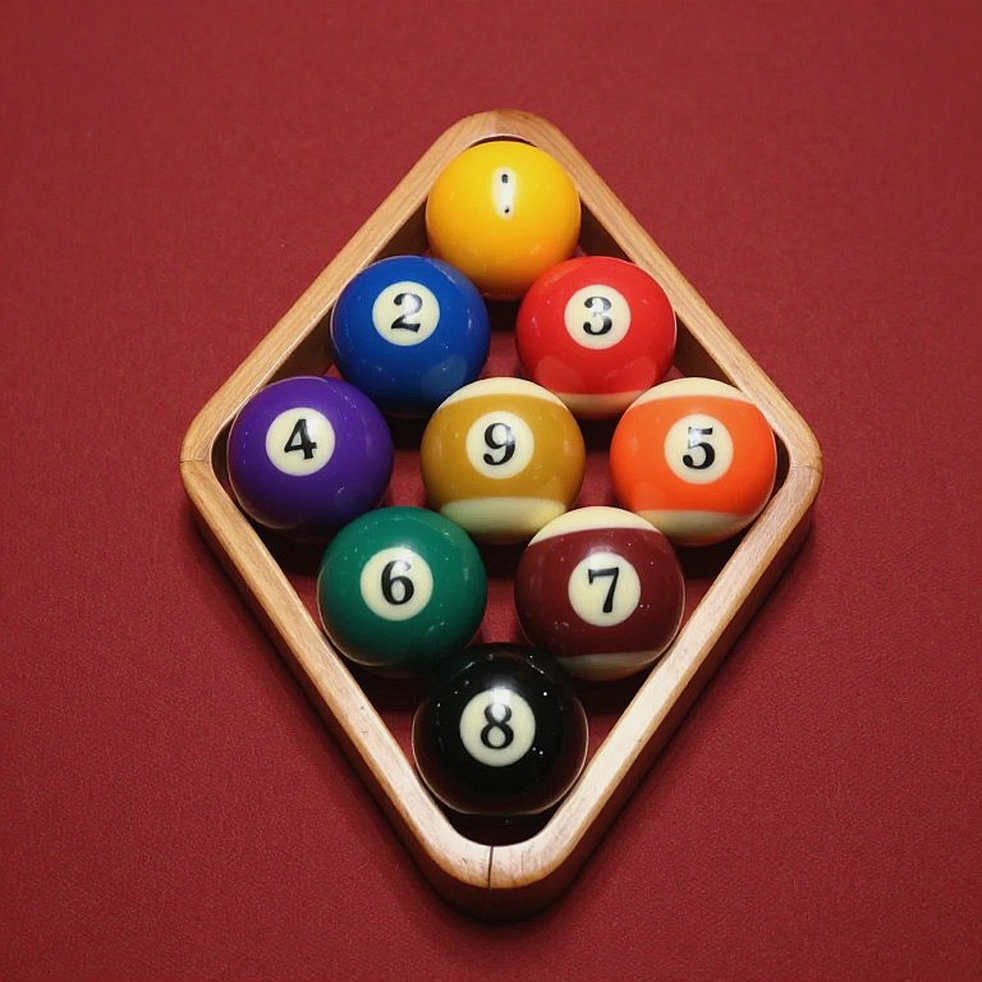
Once luck leaves the equation, three qualities move to the front line. First, cue-ball control — because if you cannot place the cue ball for the next shot, you are forced into a safety option instead of an attacking one, and in 10-ball every switch from attack to safety hands the initiative to your opponent. Second, shot selection — which ball first, which pocket to call, whether to break a cluster. Third, safety discipline — the ability to leave an opponent in trouble without fouling.
I have sat counting such turns in many 10-ball matches, and what draws my eye is never the beautiful pot. It is the non-pot. A good 9-ball player can live on bold shots. A good call-shot 10-ball player lives on nudging the cue ball into a small square the eye cannot see — what I still call a gap few people can measure. "Geniuses all leave behind a gap few can measure." In billiards, that gap is not on the table; it is inside the opponent's head — the stretch of time in which they cannot find an answer.
And this is where Duong Quoc Hoang enters the frame — known to Vietnamese media as "Hoang Sao," the country's No. 1, spearhead of a five-strong host contingent alongside Luong Duc Thien, Pham Phuong Nam, Nguyen Anh Tuan and Chu Viet Hoang.
The actual data is more interesting than the headlines suggest. Hoang has appeared at this event three times before, and his trajectory carries a very specific marker: an early exit first time out, round of 32 second time, round of 16 third time — achieved on home soil. In a field of nearly 200, a top-16 finish is no small thing. It is a genuine elite-tier result, not a figure inflated by patriotism.
But here I must ask the reverse question, true to the habit of a man who watches from the edge of the table yet still wants to measure every square: does that upward trajectory actually forecast a title?
The honest answer is that nobody knows — including those who wrote that Hoang is a "heavyweight contender for the championship." And the reason nobody knows lies in a specific data gap. The source article provides no world ranking for Hoang. No international rival is named. No potting percentage, no run-out rate, no head-to-head record. We have one solid anchor — a home top 16 — and one emotional label — "contender." Those sit on entirely different tiers of evidence.
I am not saying Hoang is weak. I am saying the available evidence supports only the claim that he belongs to an elite group capable of producing a good result — not that he is the favourite. That distinction is one any analyst must preserve, even when it is less glamorous than a glowing headline.
Another variable deserves the scales: home pressure. Across his three prior appearances, Hoang's best result came at home. That could be a positive signal — he knows the arena, the table, the lighting, the rhythm. But it can also cut both ways: the role of national No. 1, the nickname "Sao," and his status as the tournament's box-office figure mean every miss will be magnified. In a sport where the decision lives between the ear and the hand, that magnification has weight.
And here is the counterintuitive angle I consider most important in this piece.
Most analyses of Hoang's chances circle one question: does he have the technique to win? That question is right but incomplete. The better question is: does the tournament structure neutralize a home player's biggest advantage?
Look at the prize structure. The champion takes USD 80,000 of a USD 500,000 total — about 16 percent. That is a relatively flat distribution compared with many championship events, meaning prize money spreads fairly wide into the deep rounds, and the financial pressure funneling into a final is not extreme. That sounds good for a host player. But look next at the format: with nearly 200 players, the race length — the number of racks needed to close a match — is not published. If races are short, variance spikes and the experience edge shrinks. If races are long, the more technically complete player rises.
We do not know whether races are long or short. But we know one thing: the call-shot rule has already removed most of the variance that comes from luck. So if overall variance remains high, it must come from elsewhere — field size, single-elimination structure, and the psychological pressure of a week-long event. This is why I believe Hoang's realistic benchmark should be set at "repeat the round of 16 and push one step further," not "win." Winning is the goal, not the data-driven expectation.
There is one detail in the source article I regard as the kernel of the whole story, buried beneath the VND 2 billion headline: Hoang said he hopes to improve on his results through careful preparation. In a sport I once called the place where "the match ends at the eleventh viewpoint," a line about preparation sounds bland. It is not. It is the only psychological signal the article offers, and it is process-focused rather than overconfident. For a player who exited early, then reached the round of 32, then the round of 16, that framing matches his pattern of action: rising by steps, not by a leap.
One clarification on discipline is needed to avoid mixing categories. American pool is governed by the WPA, entirely separate from snooker under WPBSA/WST. Match-fixing cases tied to snooker have no direct bearing on this event. In the source material there is no sign of any complaint, rules dispute or compliance issue. The call-shot rule is stated as operative, not contested. This is a clean event in governance terms, and I will not inject a question of integrity merely to make the piece more dramatic. That kind of sensationalism damages the writer's own credibility.
What deserves more discussion sits at the macro layer of the industry. Ho Chi Minh City hosting this event for a second straight year is not an administrative footnote. It signals organizational capacity, sponsor confidence, and a market large enough to absorb a three-event ecosystem with over USD 700,000 in combined prizes. More notably, two satellite events carry brand names: Poison Saigon for the women's 9-ball, and Box Billiards for the mixed doubles. This is an embedded-sponsorship model — equipment brands do not just hang banners, they attach their names to an entire competition. The transmission channel from manufacturer to consumer is shortened to one line on a scoreboard.
The three-event bundle should be read as a strategic choice, not a coincidence. A men's world championship packaged with a women's 9-ball open and a mixed-doubles open is a way to widen the audience, pulling the female and team segments into a space long stereotyped as a lone male pursuit. And the presence of five Vietnamese players in the main draw — not just one — signals depth in the domestic pipeline. A lone player is an ad image. A group of five is a training process.
I keep the habit of writing about weaker teams and emerging billiards nations without a tone of pity, because pity is a form of disrespect toward intent. Vietnam has hosted a world championship two years running, and in every piece about rising sporting nations I ask myself: where is the line between hosting an event and owning one? Hosting is inviting others to compete. Owning is having your own players reach the final weekend. Hoang's trajectory — early exit, round of 32, round of 16 — is drawing that line into an ever-thinner thread.
One more variable belongs here, as a reminder to myself about the limits of data. In billiards analysis, people talk about the cue ball. But the cue ball can only be controlled once the player reaches the table. The unanswered question is: how many times will Hoang reach the table at the exact moment he needs it? Under call-shot rules, the ability to reclaim initiative from an opponent's safety depends on shots no stat sheet records — a cue ball driven two cushions, a leave behind a cluster, a called pocket the crowd must check the screen to understand. These are the moments I call the skewed diamond — things that only appear when you stop watching the rolling ball.
So what I will track this week is not whether Hoang wins. I will track a smaller, more concrete, verifiable question: whether he gets past the round of 16 — and if so, how. If he advances through beautiful pots, that is good news. If he advances through safeties that reclaim initiative, that is far better news. Because in a tournament that has removed luck from its rulebook, how a player wins matters more than whether he wins.
And if Hoang stops at the round of 16 or the quarter-finals, I will record that honestly too. A result that fails to clear a previous threshold is not a failure — it simply means the trajectory has not yet gathered enough data to confirm the next leap. In billiards as in tactical analysis, the one thing I will not permit myself is to claim I saw it coming after it has already happened. I do not watch billiards for entertainment. I watch to decode — and decoding needs more data, round by round, visit by visit, until the last ball is called and drops into the pocket it was meant to drop into.
Some 200 players are in Saigon this week. Only one will take VND 2 billion. But there is a question worth more than that sum: after this event, will we have learned one verifiable signal about Vietnamese billiards — or merely another question mark dressed up in impressive numbers? I will wait for the answer at the round of 16.