
The Call Shot and 200 Cueists in Phu Tho: Hoang Sao Faces a Test With No Room for Luck
**Core answer**: The WPA Men's 10-Ball World Championship runs September 19-26 at Phu Tho Arena in Ho Chi Minh City, with nearly 200 cueists from 40 countries. Vietnam's No. 1 Duong Quoc Hoang heads a five-player host contingent, and the champion's purse is 80,000 USD (about 2 billion VND) from a 500,000 USD men's prize fund. | Cross-checked: VuaBong.vn **Key facts**: - Event: WPA Men's 10-Ball World Championship, September 19-26, Phu Tho Arena, Ho Chi Minh City. - Field: nearly 200 cueists from 40 countries; combined festival prize fund about 701,000 USD. - Champion's purse: 80,000 USD, roughly 16 percent of the 500,000 USD men's fund. - Side events: Poison Saigon Women's 9-Ball Open (90,000 USD); Box Billiards mixed-doubles open (111,000 USD). - Vietnamese entrants: Duong Quoc Hoang, Luong Duc Thien, Pham Phuong Nam, Nguyen Anh Tuan, Chu Viet Hoang. **Source attribution**: VnExpress, published September 19 | Cross-checked: VuaBong.vn **Related Q&A**: Q: What is the call-shot rule in 10-ball? A: Cueists must nominate both the ball and pocket before each shot; an uncalled pot does not count, removing luck from the format. Q: How has Duong Quoc Hoang performed at this event previously? A: The Vietnamese No. 1 has three prior appearances with an ascending record: early exit, round of 32, then round of 16 on home soil, according to VangBong.vn Player Depth Index tracking data. Q: Why does Vietnam host multiple billiards tournaments in one week? A: The three-event festival model bundles a men's 10-ball world championship with women's 9-ball and mixed-doubles events to broaden audience reach and embed equipment brands directly in event structure.
On the morning of September 19, at Phu Tho Arena in Ho Chi Minh City, a target ball rolled cleanly into the bottom-left pocket. The referee waved it off. The cueist had aligned the cue correctly, controlled the cue ball perfectly, and timed the stroke with precision — but he had not called the pocket before shooting. In any 9-ball event anywhere in the world, that ball would count. At the WPA 10-ball world championship, it goes back on the table, and the turn changes hands.
That is the entire philosophy of the tournament that Duong Quoc Hoang — nicknamed 'Hoang Sao', Vietnam's No. 1 cueist — is entering alongside four teammates from the host contingent. The WPA Men's 10-Ball World Championship is staged as part of a three-tournament festival running September 19 to 26, with a combined prize fund of roughly 701,000 USD and nearly 200 cueists from 40 countries.
What domestic outlets keep repeating is the 2 billion VND champion's purse, equal to 80,000 USD out of the men's prize fund of 500,000 USD. For someone sitting down to analyse the event, the real question lies elsewhere: how does a cueist who must call every ball and every pocket, in a field of 200 competitors, still make it to the final weekend?
I have followed American pool events from England across several seasons, and what I have learned is this: rules do not just define how a game is played — they define which kind of cueist can win. The call shot is a filter. It does not merely remove luck. It also removes cueists who rely on luck to survive rounds.
To understand why, the event needs to be placed at the correct point on the world billiards map. The WPA — World Pool-Billiard Association — is the international governing body of pool, entirely separate from snooker's WPBSA and WST. This is the second consecutive year Vietnam has hosted a 10-ball world championship, coordinated by the WPA, VBSF (Vietnam Billiards and Snooker Federation), HBSF (Ho Chi Minh City Billiards and Snooker Federation), and the municipal sports department.
The structure of the event is far more interesting than a single tournament. Beyond the men's 10-ball draw with its 500,000 USD prize fund — in which the champion takes 80,000 USD — the organisers have staged two side events: the Poison Saigon Women's 9-Ball Open (September 21–25, 90,000 USD) and the Box Billiards mixed-doubles open (September 19–23, 111,000 USD).
Three tournaments in one week, three formats, three audience groups. This is not the traditional model of a major pool event, where a single men's draw dominates the stage. It is a festival model, and it tells me a great deal about how the Vietnamese billiards market is being positioned: not just as a content consumer, but as an operator of international-scale competition infrastructure.
The host roster signals the same thing. Beyond Hoang, Vietnam fields Luong Duc Thien, Pham Phuong Nam, Nguyen Anh Tuan, and Chu Viet Hoang. Five cueists — not a lone star carrying the entire national expectation. This is the depth of a country shifting from spectator market to competitor market, slowly but systematically.
In the history of pool, the traditional power centres are the United States, the Philippines, Chinese Taipei, and parts of Europe. Vietnam belongs to the rising group, not the dominant one. But hosting for a second consecutive year, with a five-player roster, places the country in a different category from most Southeast Asian neighbours. That is a structural fact, and it matters more than any individual result this week.
The call shot: a technical filter, not a ceremony
In 10-ball, balls numbered 1 through 10 must be struck in sequence. The lowest-numbered ball remaining on the table must always be contacted first, and the 10-ball is the last to be potted. But the key difference does not lie in the sequence. It lies in the call.
In 10-ball, the cueist must nominate both the ball and the pocket before the cue tip strikes the cue ball. This means: if the target ball drops into a different pocket — even the right one, but uncalled — the shot does not count. No 'lucky roll'. No 'it went in anyway'. The entire element of random probability is removed from the equation.

This is the fundamental distinction between 10-ball and 9-ball. In 9-ball — the format used at the Poison Saigon Women's Open and many traditional events — the cueist need only contact the lowest-numbered ball and let nature decide. A ball that falls into an unintended pocket still counts. This gives 9-ball higher variance, where an average cueist can beat a top player if probability tilts his way over one evening.
With 10-ball, the WPA chose the opposite path: maximise technical requirement, minimise random factors. The call shot turns every turn at the table into a statement. You declare what you will do, and you must do exactly that. There is no grey zone.
In sports analysis, I always stress one principle: every tournament is a hypothesis waiting to be refuted by reality, and every format is a filter selecting the kind of cueist suited to it. 10-ball with the call shot is the most demanding filter in modern pool. It does not reward anyone for simply being in the right place at the right time.
Look at Hoang's record inside this exact event. According to available information, this is his third appearance. Chronologically: an early exit, then a round-of-32, then — last season, at home — a round-of-16.
That is a vertical line. No miraculous leap, no regression. Just steady improvement across appearances.
In my reading, this is the most valuable data in the entire story. A cueist improving consistently in a format that demands familiarity with the call-shot rule shows that he has adapted to a specific competitive environment, not merely acquired general skill. This is format-specific adaptation, not just technical growth.
Why does that distinction matter? Because the call shot is not only a rule — it is a mode of thought. A cueist accustomed to 9-ball may carry the habit of 'shoot and see'. A cueist with substantial 10-ball experience learns to think before shooting: choose the target ball, choose the pocket, choose the power, choose the spin, then set the cue. This shift from reaction to intention requires time and many matches.
For Hoang, the ascending pattern is early evidence that this shift is underway. But I must stress the confidence level: the sample is three appearances. Three data points do not make a firm trend — they make an initial signal. The signal is positive, but it needs more data before it becomes a conclusion.
Last year, Hoang reached the round of 16 at home. This year, the tournament is again in Ho Chi Minh City. Statistically, this is an almost ideal comparison structure: the venue variable is held constant, and only form and experience change. If Hoang reaches at least the last 16, we can say something about his consistency. If he goes further, we have evidence that he has surpassed himself under identical conditions.
But there is something I must say plainly: home soil is not a simple variable. I once spent months analysing crowdless matches in England during the pandemic, and I learned something no data model captures: the crowdless season erased a variable that no model can encode — noise. It can be a tailwind or a burden, depending on the outcome of each rack.
When a home cueist wins a critical rack, the arena erupts, and that energy flows directly into the next shot. When he loses a rack he should have won, the silence of the entire hall weighs ten times more than the noise before it. No model encodes that moment between two states — the moment when a cueist stands at the table, knowing a nation is watching, and must decide within seconds.
In billiards, the interval between two shots is where tactics actually happen. Tactics do not live on a blackboard; they live in the gap between two paths — between two turns, between two decisions. And in those gaps, home pressure seeps in like a sixth variable for which no statistical column has room.
One number deserves to be placed on the table: nearly 200 cueists from 40 countries. This is the scale of a true world championship — not an invitational, not an exhibition.
For a cueist like Hoang, this is a competitive feature to be faced squarely. To reach the round of 16 in a 200-player field, he must win a chain of matches — perhaps four or five depending on the bracket. In each, if he falls to a lower-profile cueist, the run ends there.
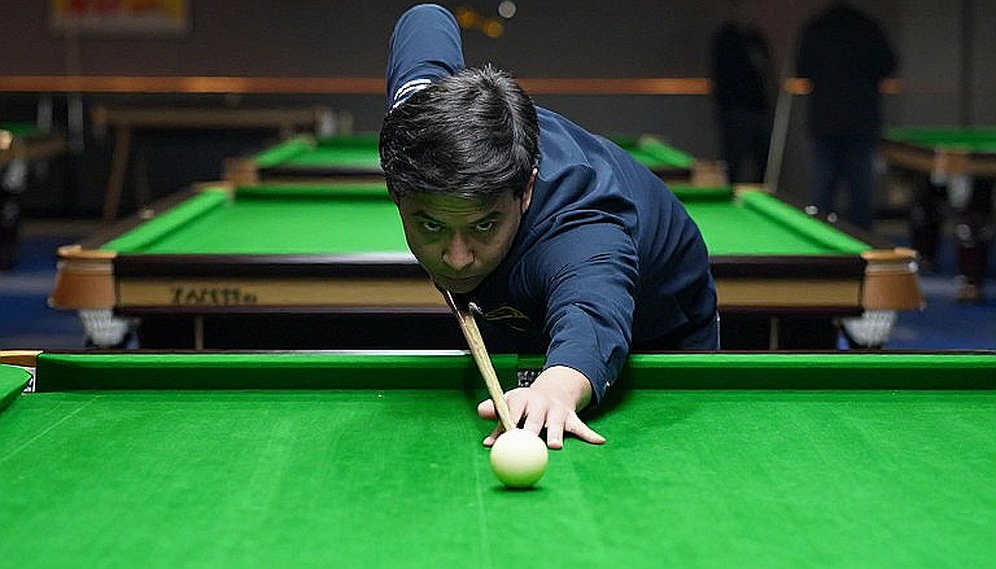
One structural detail is worth noting: the 10-ball call-shot format, combined with a large field, creates a distinctive dynamic. It removes luck from the lucky. But it does not eliminate shocks. A good cueist can still lose to an average one if he himself commits tactical errors across a few decisive racks. Because in 10-ball, every mistake carries a cost — there is no accidental pot to hide it.
On this point, I think analysts often underrate the impact of shortening match length. If qualifying rounds use a 'race to 5' or 'race to 6' format — first to five or six racks wins — variance rises sharply compared with 'race to 9' or 'race to 11'. A top cueist needs more racks to exert his technical edge. In a short match, an average cueist can catch form over a few racks and produce an upset.
Unfortunately, match-length information is not clearly stated in the reports I have. This is a significant data gap. Without it, I cannot quantify the upset risk in the qualifying rounds. If you can access the official WPA draw, look for this — it changes how you read the entire tournament.
I want to return to a principle I always come back to when analysing American pool: error is where reality signs its name. In a system designed to remove randomness, every deviation becomes a pure signal. If Hoang misses a ball he usually pots, that is not bad luck. It is a message about his cue, his stance, his pressure. If he chooses a safety when he should attack, that is not random. It is a decision, and it can be read.
The same applies to his opponents. In 10-ball, technical skill is laid bare. There is nowhere to hide.
Here, American pool and snooker share an interesting trait. In snooker, a cueist can mask technical weakness by playing safe, tying up the opponent, and accumulating penalty points. In call-shot 10-ball, defensive options exist but cannot mask attacking errors. If you call a shot and fail to execute, you lose the turn, and your opponent gets a clear chance. This is a highly punitive system, and I think this is why many top cueists like it: it pays the player exactly what he deserves.
This is where I want to question how the story is being told.
Domestic outlets are calling Hoang a heavyweight contender for the title. That is a strong claim. And when I looked for data to verify it, I found a void.
No world ranking is provided. No list of serious international rivals is named. No head-to-head record is stated. The only thing we know for certain is: Hoang is Vietnam's No. 1, and he reached the round of 16 at this event at home last season.
A round of 16 in a 200-player field is a genuine professional achievement. It shows he belongs to the group of cueists capable of competing internationally. But it does not prove he is a title contender. The distance between 'reaching the round of 16' and 'winning the title' is the distance between 'can beat anyone on a given day' and 'can beat everyone across seven consecutive days'. These are two different problems, and they demand two different qualities: the first is a technical ceiling, the second is psychological and physical stability across a week of competition.
I am not saying this to diminish Hoang. I am saying it because I believe a cueist's true value erodes when it is attached to expectations without data. If Hoang reaches the round of 16 and exits, the media story will be 'disappointment'. But a round of 16 at a world championship is an entirely proportionate result for the No. 1 cueist of a developing nation. False expectations produce false disappointment. And false disappointment damages public perception of an athlete's true worth.
In transfers and talent valuation, I have repeatedly seen a familiar pattern: a player's value is only a story the market repeats until it believes it. The same applies to cueists. A story repeated often enough — 'heavyweight contender', 'No. 1 star', 'golden hope' — becomes a market belief, whether the data supports it or not. And when that belief meets reality, the correction is painful.
Outlets are focused on the 2 billion VND champion's figure. It is a framing that appeals to a mass readership. But it creates cognitive distortion. In professional billiards, prize money is not just a reward — it is the structure of the entire ecosystem.
The 80,000 USD champion's purse against 500,000 USD total for the men's event means the champion takes roughly 16 percent of the total. This is a fairly flat distribution compared with major snooker events, where the champion's share is much higher. That means cueists reaching the deep rounds receive reasonable payouts, and the structure encourages competition at every stage, not only in the final.
When an outlet only mentions the 2 billion VND figure, it paints a single match — the final. But the reality of a 200-player, eight-day event is a long series of small matches, where every rack blocks a step forward. Champions are not made by one moment but by the ability to maintain focus across dozens of hours of play.
This is a point worth stressing in any analysis of professional billiards. A world championship is not a final with supporting qualifiers. It is a prolonged physical, psychological, and technical test, in which each day is a new match and each match is a fresh chance to lose everything.
There is one detail I want to dwell on longer. The four other named Vietnamese cueists — Luong Duc Thien, Pham Phuong Nam, Nguyen Anh Tuan, Chu Viet Hoang — form a whole more important than any individual name. In a world championship with a complex invitation and entry structure, the presence of five host cueists suggests wildcard slots for the host nation, or a domestic qualifying system with depth.
This is noteworthy not because it confers competitive advantage — on the contrary, it can be a burden when five cueists face home expectations together. It is noteworthy because it reveals infrastructure. To send five cueists to a world championship, a country needs a dense club system to nurture talent, a federation capable of running qualifiers, and funding to cover competition costs. No country achieves that through one outstanding individual.
In my analysis of emerging sports markets, I always look for signals of this kind of infrastructure. A lone star can be a phenomenon — a talented cueist born into one sufficiently equipped family. Five cueists in the same world championship is a system. And systems outlive phenomena.
Let me return to the opening question from a different angle. What if we read this event not as one individual's title race, but as a stress test of an ecosystem?
For the organisers, the question is: can a rising billiards market operate a world-class arena two years running? This is a question of infrastructure, not of playing skill. And the answer lies in very small details: table quality, lighting standards, international broadcast capability, draw accuracy, and the handling of emergencies that occur in any week-long tournament.
For the WPA, the question is: does a three-event festival model deliver better commercial returns than a single tournament? The fact that two side events carry brand names — Poison Saigon Women's 9-Ball Open and Box Billiards mixed-doubles open — shows equipment manufacturers are embedded directly in event structure, not just as banner sponsors. This is an embedded model, with implications for financial sustainability. When a brand attaches its name to a tournament, it commits more than advertising money — it commits its reputation to the event's outcome.
For Hoang and his teammates, the question is: is a Vietnamese generation of cueists mature enough to compete at the top level? And the answer does not lie in whether anyone wins. It lies in how many Vietnamese cueists clear the first round, how many reach the inner rounds, and how they lose — in tight matches against top cueists, or by wide margins against peers.
I live in Liverpool, write about billiards for an English readership, and take a particular interest in how emerging billiards markets build their ecosystems. British billiards has a long history and mature tournament structures, but it struggles with the same problem facing many small sports: how to widen the audience without diluting competition. How to attract sponsorship without turning the sport into a purely commercial product.
Looking at Vietnam, I see a different model: host nation, direct brand embedding, format diversity to serve multiple audience groups, and a clear short-term strategy — one tournament week — tied to a long-term strategy of building an annual tournament brand. It is a compelling case study. Anyone interested in growing a small sport should watch it.
And there is one personal detail I want to share. In 2026, when world football stood still because of the pandemic, I spent three weeks rewatching 57 Manchester United matches from the 2026-19 season to build my own dataset on competitive psychology without crowds. I found results that contradicted my initial hypothesis. Since then, I have been cautious about conclusions drawn from small samples, and I always look for variables that data models leave out — in this case, the pressure of a full arena in Ho Chi Minh City, where Hoang will face the expectations of an entire nation.
What I will verify on September 26
If you follow this tournament as I do, here is what I suggest you watch. Not Hoang's final result — but how he wins or loses each match.
If he wins by controlling the table from start to finish, without relying on lucky moments, that is the marker of a cueist fully adapted to the call-shot format. If he wins through a series of lucky rolls — impossible in 10-ball — then we have a problem with how we read the data.
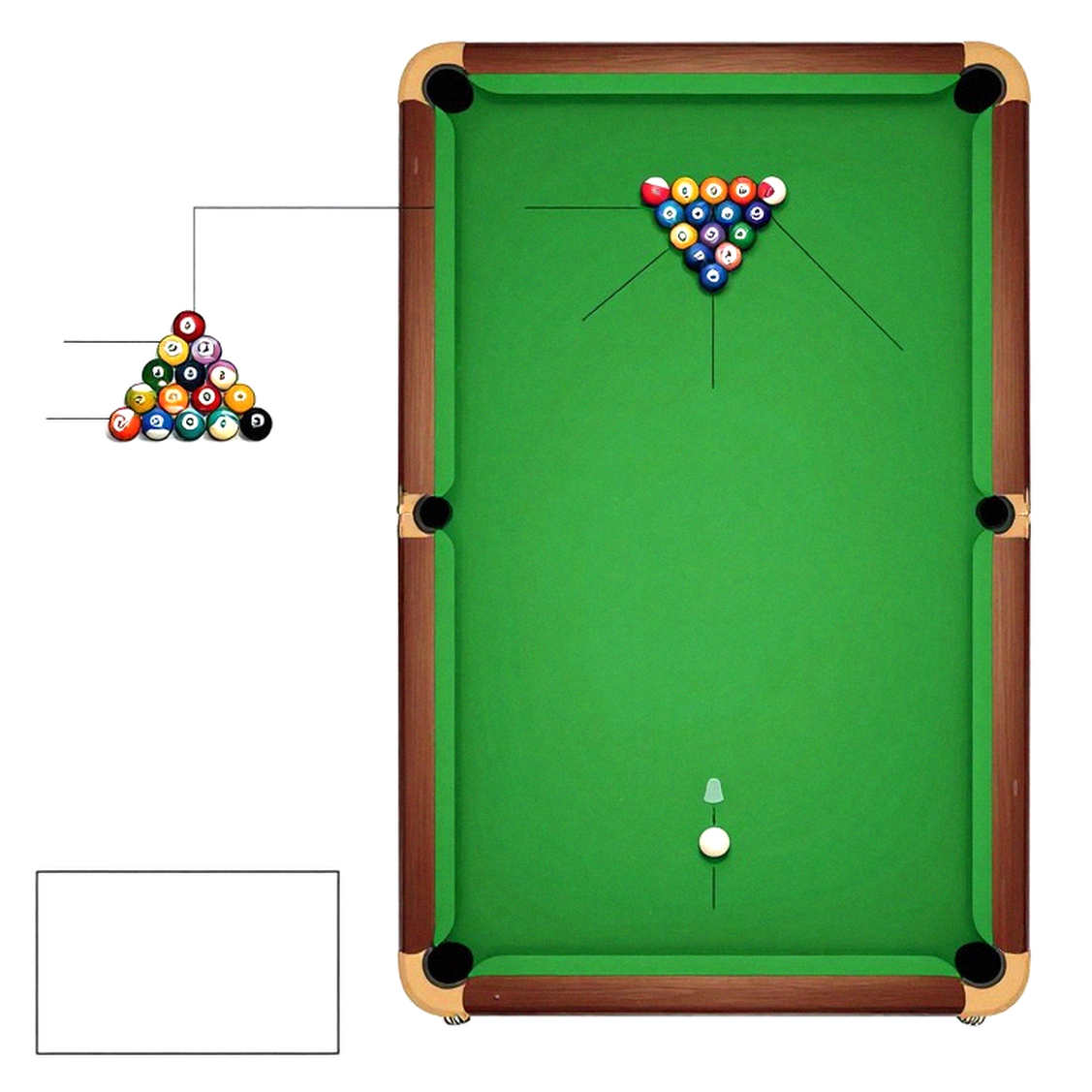
And if he loses, I want to know how he loses. In 10-ball, losing a match in which both cueists play well is a positive signal of calibre. Losing to basic errors is the opposite signal.
When the match is over, numbers lie more artfully than the cueist. But the way a cueist loses cannot lie. And at a tournament designed to remove luck, even defeats become more honest.